

Average cost of small business liability insurance 2025
Understanding What You’ll Pay to Protect Your Business
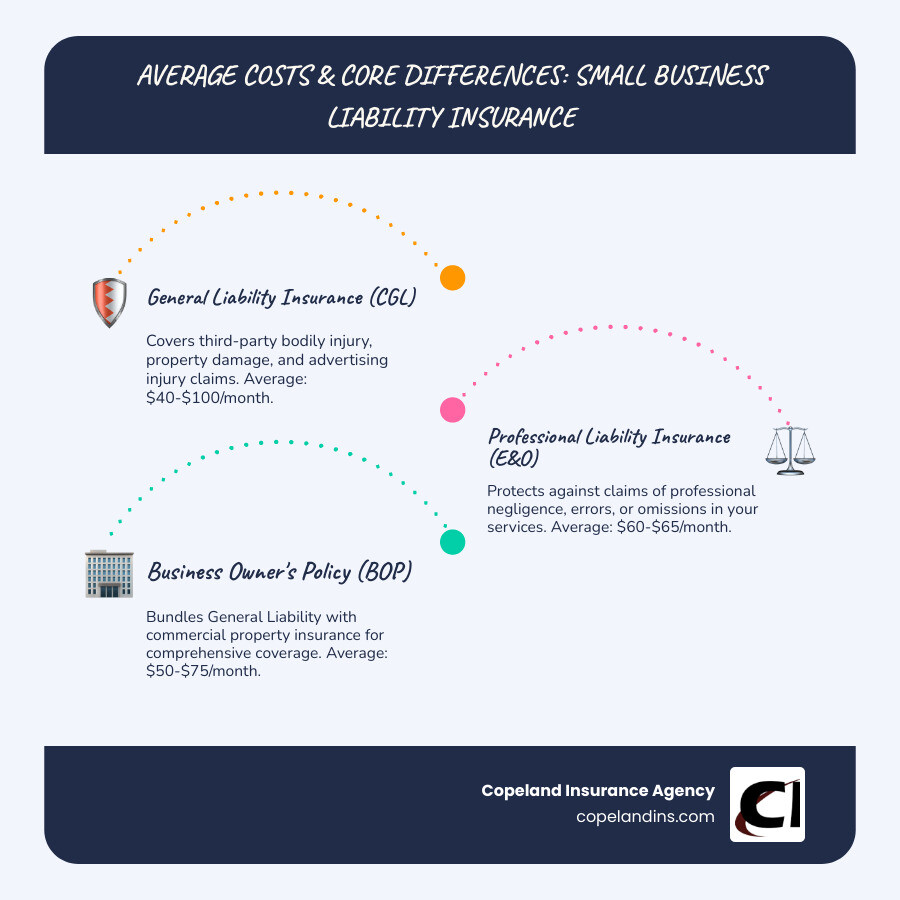
The average cost of small business liability insurance typically ranges from $40 to $100 per month for general liability coverage, though your actual cost depends on your industry, business size, and location. Here’s what most small businesses pay:
- General Liability Insurance: $40-$100/month ($500-$1,200/year)
- Professional Liability Insurance: $60-$65/month ($700-$1,500/year)
- Business Owner’s Policy (BOP): $50-$75/month ($600-$900/year)
Your specific premium depends on factors like your industry risk level, number of employees, annual revenue, coverage limits, and claims history. High-risk industries like construction typically pay more than low-risk businesses like consulting.
For small business owners, budgeting for liability insurance can feel overwhelming. However, understanding the costs is simpler than you might think, and the right coverage is often more affordable than expected. Think of liability insurance as your business’s financial safety net. Accidents happen—a customer slips and falls, an employee damages a client’s property, or a professional error leads to a lawsuit. Without insurance, these incidents could drain your savings or even force you to close.
At Copeland Insurance Agency, we’ve spent over two decades helping small businesses steer insurance costs to find coverage that fits their budget and needs. Let us walk you through what you’ll pay, what affects your premium, and how to get the best value for your investment.
What is Business Liability Insurance and Why is it Crucial?
Let’s start with the basics. Business liability insurance protects your company from third-party claims of harm, such as a customer tripping in your office or an advertisement being deemed misleading. It steps in to cover medical bills, repair costs, and expensive legal defense fees.
For small businesses, this protection is crucial. One lawsuit can wipe out years of hard work, so solid coverage provides peace of mind. You can learn more about how this coverage works on our dedicated page: More info about Business Liability Insurance.
The Core Types of Liability Coverage
Business liability insurance isn’t a single policy but a collection of coverages for specific risks.
- Commercial General Liability (CGL) is the foundation, covering everyday risks like bodily injury (a customer slips on a wet floor) and property damage (an employee damages a client’s fence). It also covers advertising injury claims like slander.
- Professional Liability Insurance, or Errors and Omissions (E&O), is for businesses providing advice or services. It protects you if a client claims your professional work caused them financial harm, such as an accountant’s error or a consultant’s failed strategy. CGL covers physical damages, while E&O covers financial losses from your services.
- Product Liability is for businesses that make, distribute, or sell products. It covers damages if a product you sold causes bodily injury or property damage, like a faulty appliance causing a fire.
- Cyber Liability is vital for businesses operating online. It helps cover costs associated with data breaches, such as notifying customers, legal fees, and recovery expenses. For a deeper look at the various coverage options available, check out our guide: More info about Insurance Policies for Businesses.
The High Cost of Being Uninsured
Operating without liability insurance is one of the riskiest decisions a business owner can make. We’ve seen entrepreneurs in Kansas, Arizona, Texas, and across our service areas face devastating consequences. The risks include:
- Staggering Financial Losses: A single slip-and-fall claim can result in over $50,000 in medical bills alone, not including pain and suffering claims.
- High Legal Defense Costs: Even if you win a lawsuit, attorney fees can easily reach $20,000 to $30,000, paid out-of-pocket without insurance.
- Risk of Bankruptcy: A major lawsuit can force even profitable businesses to close permanently.
- Reputational Damage: News of lawsuits spreads quickly, causing customers and potential clients to lose trust in your business.
- Inability to Secure Contracts: Many clients and most commercial landlords require proof of liability insurance before they will work with you or lease you space.
The average cost of small business liability insurance is a small price to pay compared to these potential consequences.
What is the Average Cost of Small Business Liability Insurance?
If you’re trying to budget for your business’s insurance needs, you’re probably wondering: “What will this actually cost me?” It’s a common question from business owners in Kansas, Arizona, Texas, and beyond. While every business is unique, understanding typical price ranges can help you plan.

The average cost of small business liability insurance varies depending on the coverage type. Industry data shows a wide range, with general liability insurance costing anywhere from $42 to over $100 per month. A Business Owner’s Policy (BOP), which bundles general liability with property insurance, often averages between $57 and $141 per month.
This wide range exists because insurance isn’t one-size-fits-all. Your actual premium depends on factors specific to your business—what you do, where you’re located, your number of employees, and chosen coverage limits. These figures are guideposts; a personalized quote is necessary to determine your real costs. For a deeper exploration of what influences general liability costs, check out our resource: More info about General Liability Insurance Costs.
Average Costs by Policy Type
Let’s break down what you can expect to pay for different types of liability coverage, based on industry data.
- General Liability Insurance (GLI): As the foundation of business insurance, GLI is often the most affordable. Most businesses pay between $42 and $101 per month ($500 to $1,214 annually). Low-risk, home-based businesses might pay as little as $17 per month.
- Professional Liability Insurance (E&O): This coverage typically costs between $61 and $62 per month ($700 to $1,500 annually). Costs vary by profession, with consultants seeing annual premiums of $700-$1,500, while healthcare providers may pay $1,500-$3,000.
- Business Owner’s Policy (BOP): Bundling general liability with commercial property insurance, a BOP typically runs $57 to $141 per month ($684 to $1,687 annually). The bundled approach often saves money. Learn more in our guide: More info about Business Owner Policy Complete Guide.
- Other Policies: Product Liability insurance starts around $800 annually, Cyber Liability averages about $145 per month, and Commercial Auto insurance can start at $500 annually per vehicle.
How Industry Impacts the Average Cost of Small Business Liability Insurance
Your industry is a major factor in your insurance costs. Insurers assess risk based on claim data, and some industries face more frequent and expensive claims.
- High-Risk Industries: These involve more physical work and public interaction. Construction and contracting companies typically pay $60 to $250 monthly for general liability due to on-site accident risks. Pressure washing businesses have high property damage potential. Restaurants face risks from public traffic, food safety, and kitchen hazards.
- Low-Risk Industries: These businesses often enjoy lower premiums. Consulting services usually fall in the $25 to $50 monthly range for general liability, as their primary risk is professional error, not physical accidents. Drone operators can pay as little as $17 per month. IT services and accounting firms also have lower physical risks, with BOPs averaging around $85-$86 monthly.
The more hands-on your work and the greater the potential for physical accidents, the higher your premiums will be. We explore these factors in more detail here: More info about Average Cost of General Liability Insurance Small Business.
A Look at Costs by Business Size and Location
Your business’s size and location also significantly influence your insurance costs.
- Business Revenue and Employee Count: More revenue and more employees generally mean higher premiums. This reflects increased opportunities for accidents and greater exposure to risk. Smaller operations (one employee, under $100k revenue) typically enjoy lower premiums.
- State-Specific Costs: Legal environments and regulations cause costs to vary by state. For example, general liability insurance in Kansas averages around $98 per month, while in Texas, the average is closer to $42 per month.
- Local Factors: Even within a state, local conditions matter. Operating in an area with higher crime rates or heavy foot traffic can increase premiums. For our clients in Manhattan, Abilene, Junction City, Overland, Marysville, Riley, Salina, Topeka, and Wamego, Kansas, as well as those in Arizona and Texas, we analyze these local nuances to find the right coverage.
Your actual average cost of small business liability insurance depends on your unique combination of factors, making a personalized quote essential.
Key Factors That Determine Your Insurance Premiums
Understanding the average cost of small business liability insurance requires looking at the factors that shape your premiums. Insurance providers use a sophisticated risk assessment, and every aspect of your business contributes to its unique risk profile.

Two coffee shops in the same town might pay different premiums based on their specific circumstances—one a busy corner cafe, the other a small drive-through. At Copeland Insurance Agency, we help you understand how these elements influence your quote to accurately match coverage to your actual risks. For more detailed insights, please refer to our resource: More info about Understanding Your Small Business Liability Insurance Cost.
Your Business Operations and Risk Profile
This is the most critical factor. Insurers analyze the inherent risks of your daily operations.
- Industry Classification: Your business is assigned a code reflecting its primary activity, giving insurers a quick gauge of your general risk level (e.g., construction is higher risk than graphic design).
- Premises and Interaction: A commercial storefront with high customer foot traffic presents more liability risks (like slip-and-falls) than a home-based business. Similarly, businesses with frequent public interaction, like retailers or restaurants, face a higher likelihood of claims.
- Services and Products: Insurers scrutinize the specifics of what you offer. Working with sensitive data, selling products with malfunction potential, or entering clients’ homes all add layers to your risk profile.
Coverage Limits and Deductibles
The amount of coverage you choose and your deductible directly impact your premium.
- Coverage Limits: Policies have a per-occurrence limit (max payout for one incident) and an aggregate limit (total max payout per policy term). A common standard for small businesses is $1 million per-occurrence and $2 million aggregate. Higher limits mean higher premiums but offer greater protection.
- Deductible: This is the out-of-pocket amount you pay before insurance kicks in. A higher deductible lowers your premium. It’s essential to select a deductible you can comfortably afford; a common choice is around $500.
The Impact of Your Claims History
Your business’s track record is a strong indicator of future risk.
A clean claims record signals lower risk to insurers and typically qualifies you for lower premiums. It reflects a commitment to safety and good risk management. Conversely, a history of frequent or severe claims leads to increased premiums, as insurers view your business as more likely to file future claims.
This highlights the importance of proactive risk management. Implementing safety programs and addressing hazards not only prevents immediate losses but also helps keep insurance costs down long-term. Working with a qualified professional is also key. You can verify a producer’s credentials through resources like the National Association of Insurance Commissioners (NAIC) lookup tool. This gives you confidence that you’re getting accurate advice from a licensed expert.
How to Get the Right Coverage at the Best Price
Finding the right business liability insurance doesn’t have to be complicated. At Copeland Insurance Agency, we believe you deserve solid protection at a price that fits your budget. With the right approach, you can have both. Let’s walk through practical strategies that help our clients across Kansas, Arizona, and Texas get quality coverage without overpaying. For more comprehensive guidance, visit our page on General Liability Insurance for Small Business.
Smart Strategies for Saving Money
Reducing your insurance costs means being strategic, not skimping on coverage.
- Bundle Policies: A Business Owner’s Policy (BOP) combines general liability with commercial property insurance, often at a lower cost and with discounts up to 10%.
- Raise Your Deductible: Choosing a higher deductible (e.g., $1,000 instead of $500) will lower your premium. Just ensure you can afford the out-of-pocket cost.
- Pay Annually: Paying your premium upfront for the year often eliminates financing fees and may qualify you for a discount.
- Implement Safety Programs: Demonstrating proactive risk management with employee training, equipment maintenance, and a safe workspace can lead to discounts.
- Maintain a Clean Claims History: A record free of claims is one of the best ways to qualify for better rates over time.
- Shop Around: Rates vary significantly between providers. Get multiple quotes to compare both price and what each policy covers.

Is Business Liability Insurance Legally Required?
This question comes up constantly, and the answer is: it depends. While most states don’t require general liability insurance for all businesses, other coverages are often mandatory. Workers’ Compensation is required in nearly every state for businesses with employees, and Commercial Auto insurance is mandatory if you use vehicles for business.
Even when not legally required, contractual obligations often make liability insurance essential. Clients and commercial landlords almost universally require proof of general or professional liability insurance before signing contracts or leases. Additionally, many licensed professions, like real estate agents and healthcare providers, must carry professional liability (E&O) insurance to practice legally.
The bottom line? The average cost of small business liability insurance is modest compared to the financial devastation a single uninsured claim could cause. For new businesses, our guide on Business Insurance for Startups provides valuable insights.
Getting an Accurate Quote and Reviewing Your Policy
To get an accurate quote, you’ll need to provide detailed information about your business, including your business type, location (e.g., Manhattan, Abilene, Topeka), estimated annual revenue, number of employees, and a clear description of your services or products. Be prepared to discuss desired coverage limits, deductibles, and any past claims history.
Once you have coverage, conduct annual policy reviews. Your business evolves, and your insurance should too. We schedule regular reviews with our clients to ensure their coverage keeps pace with their growth, they’re taking advantage of new discounts, and they aren’t overpaying. It’s a health checkup for your business’s financial safety net.

Conclusion
Understanding the average cost of small business liability insurance is about making an informed decision to protect your hard work. While costs vary based on your industry, location, and size—with general liability often ranging from $40 to $100 per month—the protection it provides is invaluable. The right coverage ensures that a single lawsuit or accident won’t force you to choose between defending your business and keeping your doors open.
At Copeland Insurance Agency, we know every business is different. We don’t use one-size-fits-all solutions. Instead, we take the time to understand your specific operations and budget to find coverage that truly fits. With licenses in nine states, including Kansas, Arizona, and Texas, and local offices serving communities like Manhattan, Abilene, Junction City, and Topeka, we provide the personalized service you deserve.
Your business is your livelihood. Protecting it shouldn’t be confusing. We’re committed to making the insurance process straightforward and ensuring you have the comprehensive coverage you need at a price that works for you.
Ready to find the right protection for your business? Reach out to us today for a personalized consultation and see how Copeland Insurance Agency can be your trusted partner in safeguarding your future: More info about Business Insurance.