

How Much is Truck Insurance in 2024? Top Costs & Tips
Why Understanding Truck Insurance Costs is Crucial
How much is truck insurance? If you’re in the trucking business, that’s probably one of your top questions. Truck insurance can vary a lot depending on several factors, so here’s a brief idea:
- Average Costs:
- For a single truck operation, insurance can range from $8,000 to $12,000 annually.
- For a fleet, costs can range from $5,000 to $6,500 per truck, due to volume discounts.
Key Factors Impacting Costs:
- Driving Record: Clean driving records mean lower rates.
- Type of Cargo: High-risk cargo increases premiums.
- Truck Condition: Newer trucks with better safety features cost less to insure.
Understanding truck insurance costs and legal requirements is essential for anyone in the trucking industry. Truck insurance is not just important—it’s legally mandatory in the U.S., varying by state. For example, in California, liability insurance requirements can range from $300,000 to $5,000,000 depending on what you haul.
Hello, I’m Vonda Copeland, CPIA, CWCU, with over twenty years of experience in helping businesses like yours steer the complexities of truck insurance. I’m here to provide clarity on how much is truck insurance and help you find custom coverage that keeps you protected.
What is Truck Insurance?
Truck insurance is specialized coverage designed to protect truck drivers, their vehicles, and the cargo they transport. It’s not just important—it’s legally mandatory in the U.S., varying by state. For example, in California, liability insurance requirements can range from $300,000 to $5,000,000 depending on what you haul.
Types of Coverage
Truck insurance is comprehensive, covering a wide range of scenarios. Here are the main types:
Primary Liability Insurance: This is the cornerstone of any truck insurance policy. It covers property damage and bodily injury that you might cause to others while operating your truck. For instance, if you accidentally hit another vehicle, primary liability insurance will cover the costs of repairs and medical bills for the other party.
Physical Damage Insurance: This protects your truck from various risks, including collisions, theft, vandalism, and natural disasters. For example, if your truck is involved in an accident or gets vandalized, this insurance will cover the repair costs.
Cargo Insurance: Essential for protecting the goods you transport. This coverage kicks in if your cargo is damaged or lost due to incidents like fire, theft, or collision. Imagine your truck is involved in a crash and the cargo gets damaged; cargo insurance will cover the cost of the damaged goods.
General Liability Insurance: Covers incidents that occur off the road but are related to your trucking operations. This includes slip-and-fall injuries at your premises and damages caused by incorrect loading or unloading of goods.
Bobtail Insurance: Provides coverage when your truck is being used for non-business purposes, such as personal errands. For example, if you’re driving your truck home after a delivery and get into an accident, bobtail insurance will cover the damages.
Non-Trucking Liability Insurance: Covers you when you’re using your truck for personal use, not under dispatch. This is especially important for owner-operators under a permanent lease to a motor carrier.
Legal Requirements
Every state has legal requirements for the amount of insurance coverage truckers must have. In California, the required amount depends upon the type and size of the truck.
- $300,000 for smaller trucks under 10,000 pounds.
- $750,000 for large trucks, including semi-trucks.
- $1,000,000 to $5,000,000 for trucks carrying hazardous substances.
These numbers refer to the combined single limit, meaning the combined total for the coverage of both property damage liability and bodily injury liability.

Understanding these types of coverage and legal requirements is crucial for any trucking business. Not only does it keep you compliant with the law, but it also protects you from financial ruin in case of an accident or other unforeseen events.
Next, we’ll dive into how much is truck insurance and explore the factors that affect its cost.
How Much is Truck Insurance?
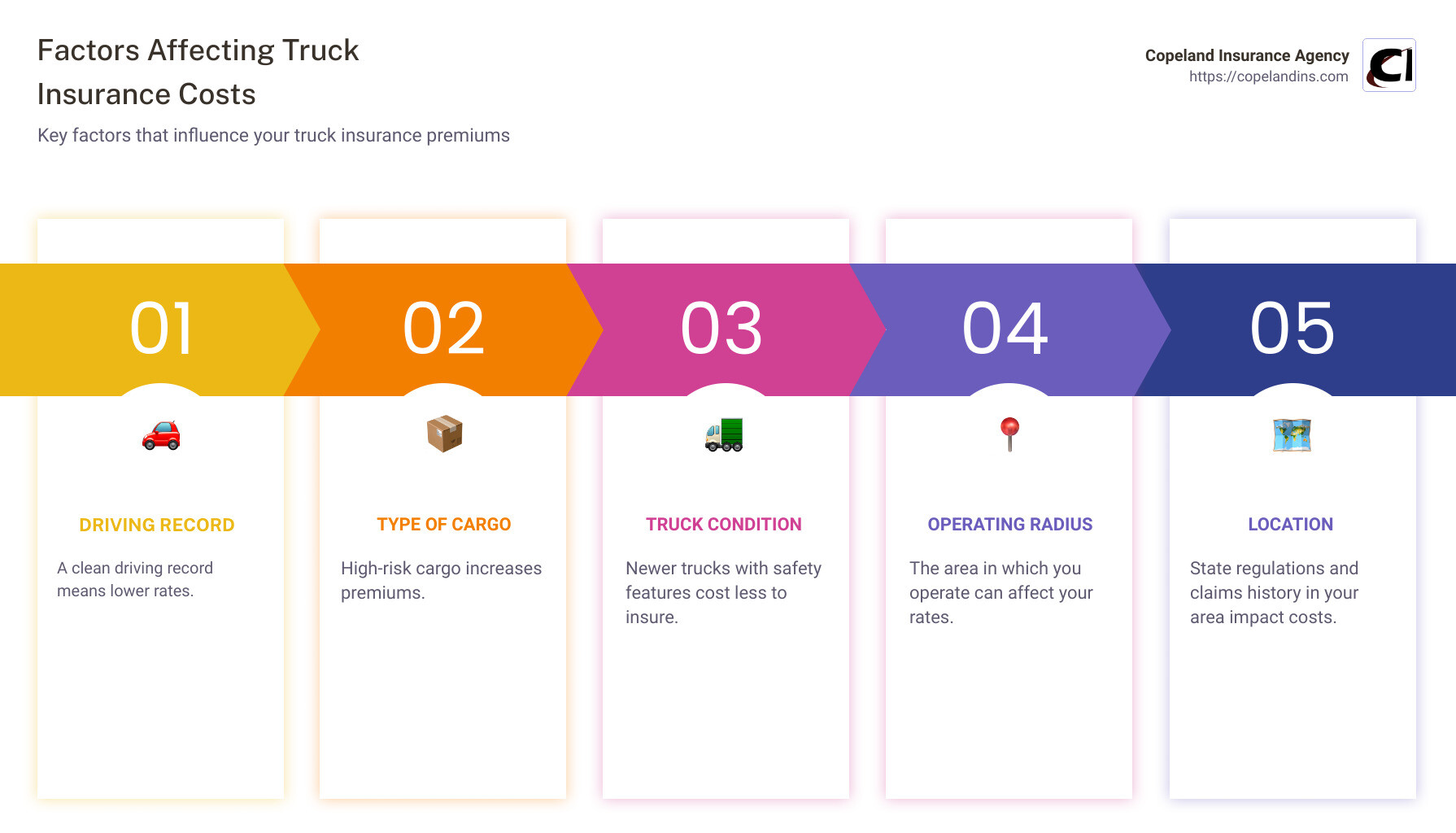
Factors Affecting Truck Insurance Costs
When asking how much is truck insurance, it’s important to know that several factors can affect your insurance premiums. Here are some key factors:
1. Driving History:
A clean driving record can save you hundreds or even thousands of dollars. Accidents and violations can drastically increase your rates. For example, a minor speeding ticket can have a significant impact on your insurance costs due to the potential for higher damage with commercial trucks.
2. Vehicle Type:
The type of vehicle you operate matters. Semi-trucks generally have higher premiums due to their size and potential for causing more damage in an accident. Specialty trucks, like garbage or tank trucks, may have different cost structures based on their specific use and associated risks.
3. Cargo Type:
High-risk cargo, such as hazardous materials or valuable electronics, typically leads to higher insurance costs due to the increased risk of theft or accidents. Conversely, transporting low-value goods like fresh produce might result in lower premiums.
4. Operating Radius:
Your operating radius—whether local, regional, or national—impacts your risk exposure and, consequently, your insurance costs. Truckers who travel long distances face higher risks due to longer drive times and more route options, which can lead to higher premiums.
5. Location:
Insurance rates vary by state due to different regulatory requirements and risk factors. For example, states with higher accident rates or more stringent insurance regulations may have higher premiums.
Average Costs by Truck Type
Now, let’s break down the average insurance costs by different truck types:
Semi-Trucks:
For owner-operators who do business with a motor carrier, the average semi-truck insurance cost is about $300-$400 per truck, per month (or $3,600-$5,000 per year). If you operate under your own authority, expect to spend about $1,167-$1,833 per truck, per month (or $14,000-$22,000 per year).
Pickup Trucks:
Insurance costs for pickup trucks can vary widely. For example, the national annual average for insuring a Chevrolet Silverado is $2,174.
Commercial Trucks:
Insurance costs for commercial trucks vary significantly based on factors such as the type of truck and the cargo carried. The national average monthly cost for commercial truck insurance ranges from $736 for specialty truckers to $1,125 for transport truckers. This translates to approximately $8,832 to $13,500 annually.
State Variations
Insurance costs can also vary significantly by state. Here are some examples:
Texas:
Known for its large trucking industry, Texas generally has competitive rates but can vary based on the type of cargo and operating radius.
Georgia:
In Georgia, intrastate trucking requires at least $100,000 per person and $300,000 per accident in liability coverage. Average annual costs for owner-operators range from $8,500 to $14,000.
California:
California has strict regulations and higher minimum coverage requirements, especially for hazardous materials. Expect to pay more here compared to other states.
Florida:
Florida’s rates can be higher due to its dense population and higher accident rates. It’s crucial to shop around to find the best rates.
Understanding these average costs and the breakdown of your premium can help you budget effectively and ensure you have the right coverage.
Types of Truck Insurance Coverage
Understanding the different types of truck insurance coverage is crucial for protecting your business. Let’s dive into the main categories you need to know about:
Primary Liability Insurance
Primary Liability Insurance is a must-have for all commercial truck drivers. It’s required by law and covers costs if you’re at fault in an accident. This includes:
- Property Damage Liability: Pays for repairs or replacements of another party’s vehicle or property.
- Bodily Injury Liability: Covers medical expenses for injuries you cause to others.
Example: Imagine you rear-end a car at a stoplight. Primary liability insurance would cover the costs to repair the other vehicle and pay for the driver’s medical bills.
Physical Damage Insurance
Physical Damage Insurance safeguards your truck from a range of damages. It includes several key coverages:
- Collision Insurance: Pays for damage to your truck from collisions, regardless of fault.
- Comprehensive Insurance: Covers non-collision damages like theft, vandalism, and natural disasters.
- Fire and Theft with CAC: A more limited form of comprehensive insurance, covering specific risks like fire and theft.
Example: If a tree falls on your truck during a storm, comprehensive insurance would cover the repair costs.
Occupational Accident Coverage
Occupational Accident Coverage is essential for truck drivers. It offers protection for accidents that occur on the job, covering:
- Worker’s Compensation: Pays for medical expenses, lost wages, and rehabilitation.
- Medical Expenses: Covers hospital visits, treatments, and even funeral costs.
- Lost Wages: Compensates for income lost due to injury.
Example: If you injure your back while unloading cargo, occupational accident coverage would help pay your medical bills and compensate for lost income during your recovery.
General Liability Insurance
General Liability Insurance protects your business from a variety of risks not covered by other policies. It includes:
- Business Liability: Covers incidents like slip-and-fall accidents and loading errors.
- Legal Defense Costs: Pays for your legal expenses if you’re sued.
Example: If a customer slips and falls while walking near your truck, general liability insurance would cover their medical costs and your legal fees if they decide to sue.
These coverages form the backbone of a robust truck insurance plan. Each type serves a unique purpose, ensuring you’re protected from various risks and liabilities.
Next, we’ll explore Optional Truck Insurance Coverage to see how you can further safeguard your business.
Optional Truck Insurance Coverage
While primary liability, physical damage, occupational accident, and general liability insurance are fundamental, there are several optional coverages that can provide additional protection for your trucking business. Let’s dive into these optional coverages to understand their importance and how they can help you.
Motor Truck Cargo Insurance
Motor truck cargo insurance protects the goods you’re hauling. If your cargo is damaged or stolen during transit, this coverage helps cover the loss. This is crucial for businesses transporting valuable items.
Example: Imagine you’re hauling electronics worth $100,000. If the cargo gets damaged in an accident, motor truck cargo insurance ensures you’re compensated for the loss.
Underinsured/Uninsured Motorist Coverage
Underinsured/uninsured motorist coverage protects you if you’re involved in an accident with a driver who either has no insurance or insufficient coverage. This means you won’t have to pay out-of-pocket for damages and injuries caused by another driver.
Example: If an uninsured driver hits your truck, this coverage will pay for the repairs and medical expenses, providing peace of mind.
Trailer Interchange Policy
Trailer interchange insurance covers non-owned trailers in your possession under a trailer interchange agreement. This is essential for businesses that frequently swap trailers with other companies.
Example: If you’re hauling a trailer owned by another company and it gets damaged in an accident, trailer interchange insurance will cover the repair costs.
Non-Trucking Liability
Non-trucking liability insurance covers property damage or bodily injury you cause when not operating under the authority of a motor carrier. This is useful for personal use of the truck.
Example: Using your truck to run personal errands? Non-trucking liability insurance ensures you’re covered if you get into an accident during those off-duty hours.
Bobtail Insurance
Bobtail insurance provides coverage when your truck is being driven without a trailer. This is particularly important for owner-operators who may drive their truck without a load occasionally.
Example: After dropping off a load, you’re driving back without a trailer. If you get into an accident, bobtail insurance covers the damages, ensuring you’re not left with hefty repair bills.
These optional coverages can be custom to meet the specific needs of your trucking business. They offer added layers of protection, ensuring you’re covered in various scenarios.
Next, we’ll discuss How to Save Money on Truck Insurance and explore strategies to reduce your premiums.
How to Save Money on Truck Insurance
Saving money on truck insurance can make a big difference for your business. Here are some effective strategies to lower your premiums:
Clean Driving Record
Insurance companies love drivers with clean records. A clean driving record shows you’re less likely to get into accidents, which means you’re less risky to insure.
Tip: Encourage your drivers to follow traffic laws and practice safe driving habits. This can lead to lower premiums and safer roads.
Higher Deductible
Raising your deductible can significantly reduce your insurance costs. A deductible is the amount you pay out of pocket before your insurance kicks in.
Example: If you increase your deductible from $500 to $1,000, you might see a noticeable drop in your premium. Just remember, you’ll need to pay more if you file a claim.
Discounts
Taking advantage of discounts is one of the easiest ways to save money on truck insurance. Here are some common discounts you might qualify for:
-
CDL Discount: If you’ve had a valid commercial driver’s license (CDL) for at least two years, you can qualify for a discount. Simple and effective.
-
Business Experience Discount: If your trucking business has been operating for three years or more, you’re eligible for this discount. Your experience in the industry pays off.
-
Paid-in-Full Discount: Paying your policy in full can save you up to 15%. For a $10,000 policy, that’s a $1,500 saving!
Paying Annually
Many insurance companies offer discounts for paying your premium annually instead of monthly.
Example: A policy costing $11,300 per year might seem steep, but breaking it down to $942 per month makes it more manageable. However, paying in one lump sum often comes with discounts.
Tip: If you have the cash flow, consider paying your premium upfront to take advantage of these savings.
By focusing on maintaining a clean driving record, raising your deductible, taking advantage of discounts, and paying your premium annually, you can significantly reduce your truck insurance costs.
Next, we’ll answer some Frequently Asked Questions about Truck Insurance Costs to clear up any remaining doubts.
Frequently Asked Questions about Truck Insurance Costs
Are trucks higher on insurance?
Yes, trucks typically have higher insurance costs compared to regular vehicles. This is due to several factors:
- Size and Weight: Trucks are larger and heavier, leading to more severe damage in accidents.
- Cargo: The type and value of cargo transported can increase risks.
- Operational Radius: Trucks often cover longer distances, increasing exposure to accidents.
- Regulations: Trucks must meet higher liability limits per federal and state requirements.
These factors collectively make truck insurance more expensive.
Why is trucking insurance so expensive?
Trucking insurance is costly because of the high risks involved:
- High Potential Payouts: Trucks can cause significant damage in accidents.
- Cargo Value: High-value or hazardous cargo increases risk.
- Driver Records: Even minor violations can drastically increase premiums.
- Regulatory Requirements: Federal and state regulations mandate higher liability limits for trucks.
Investing in safety measures like driver training and advanced safety technology can help lower these costs.
How much is cargo insurance for $100K?
The cost of cargo insurance for $100,000 in coverage varies, but you can expect to pay between $400 and $1,200 annually.
Factors influencing this cost include:
- Cargo Type: High-value or easily stolen items like electronics cost more to insure.
- Distance Traveled: Longer distances can increase premiums.
- Overall Insurance Package: Bundling with other coverages may offer discounts.
Accurately disclosing your cargo type is crucial to avoid claim denials and ensure proper coverage.
Conclusion
Understanding how much is truck insurance is essential for managing your trucking business effectively. We’ve covered the average costs, factors affecting those costs, and the types of coverage you might need. Truck insurance can be a significant expense, but it’s crucial for protecting your business from financial risks.
At Copeland Insurance Agency, we specialize in providing comprehensive and cost-effective trucking insurance solutions. Our team of experienced professionals is dedicated to helping you steer the complexities of trucking insurance. We work closely with you to customize a policy that fits your specific needs and budget.

For personalized assistance and to get a free quote, contact us at Copeland Insurance Agency today. Let us help you secure the best coverage for your trucking business.
We look forward to partnering with you and ensuring your trucking business is well-protected.