

Grocery Store Slip and Fall: 2 Critical Steps
Why Grocery Store Slip and Fall Claims Matter for Everyone
Grocery store slip and fall accidents are surprisingly common, sending over 1 million people to the hospital annually. A significant number of these incidents result in serious injuries like broken bones or head trauma.
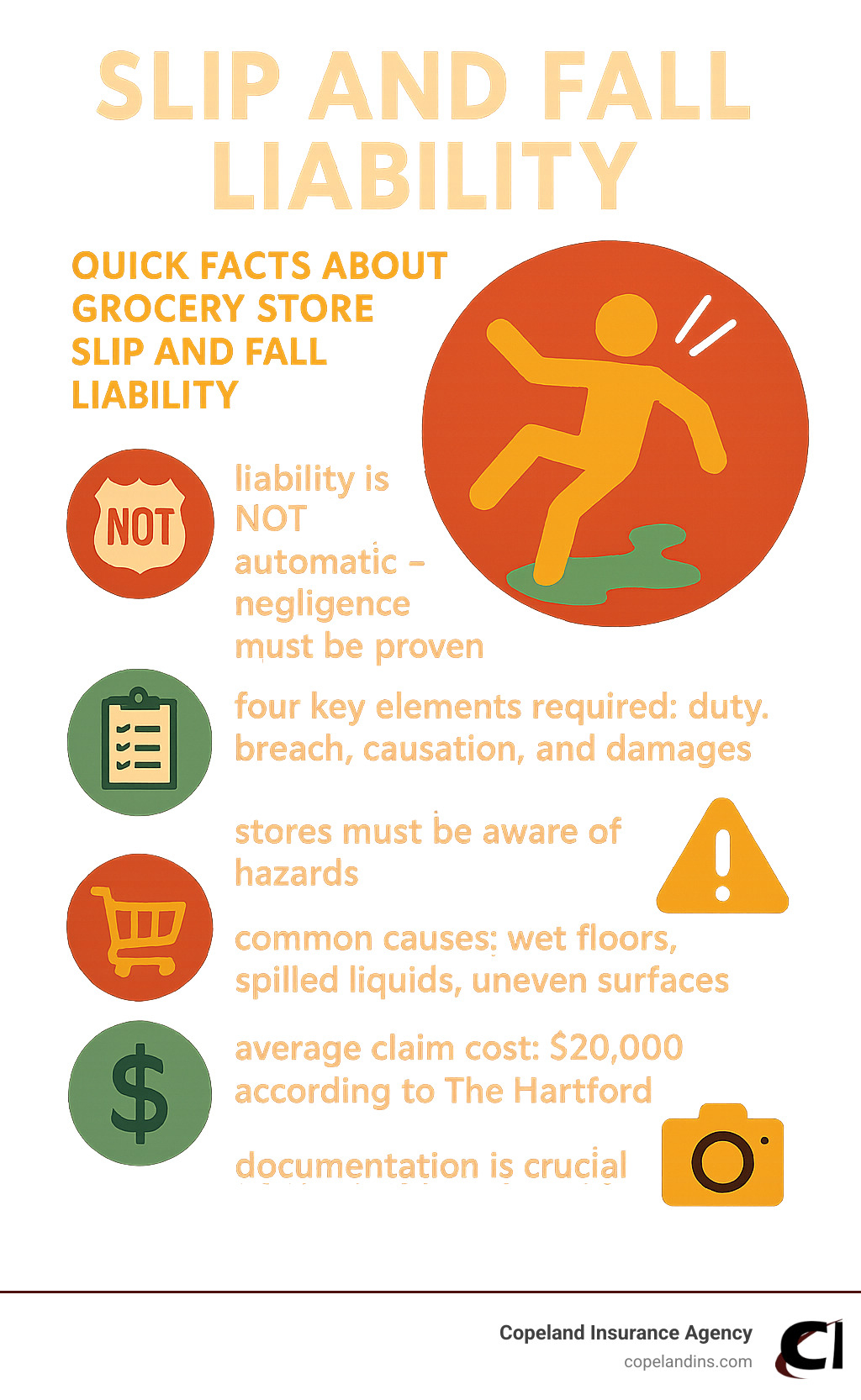
Quick Facts About Grocery Store Slip and Fall Liability:
- Store liability is NOT automatic; negligence must be proven.
- Four key elements are required: duty of care, breach of duty, causation, and damages.
- The store must have “known or should have known” about the hazard.
- Common causes include wet floors, spills, uneven surfaces, and poor lighting.
- The average claim costs around $20,000, according to The Hartford.
- Documentation like photos, witness statements, and incident reports is crucial.
Whether you’re an injured shopper or a business owner concerned about liability, understanding these claims is vital. The law requires stores to maintain safe premises, but proving negligence involves specific legal standards.
At Copeland Insurance Agency, we have spent over two decades helping businesses steer complex insurance scenarios, including grocery store slip and fall claims. We’ve seen how proper coverage and risk management can mean the difference between a manageable incident and a business-threatening lawsuit.
Relevant articles related to grocery store slip and fall:
Understanding Liability: Who is Responsible for a Grocery Store Slip and Fall?
When you slip and fall in a grocery store, premises liability law comes into play. This means property owners have a duty of care to keep their premises reasonably safe for visitors, who are legally considered “invitees.” As an invitee, you are owed the highest level of protection. This duty extends from the parking lot and sidewalks to every aisle inside the store.
The legal classification of visitors is important in premises liability cases. Invitees, like grocery store customers, receive the highest level of protection because they enter the property for the mutual benefit of both parties – you shop, and the store profits. This is different from licensees (social guests) or trespassers, who receive lower levels of protection under the law.
However, a common misconception is that the store is automatically responsible if you fall. To hold a store liable, you must prove negligence. This requires establishing four key elements:
-
Duty of Care: The store had a legal obligation to maintain a safe environment. This includes conducting regular inspections, performing routine maintenance, training employees on safety protocols, and ensuring areas like parking lots are free of hazards. The duty of care also extends to providing adequate lighting, maintaining clean and dry floors, securing loose mats or carpeting, and ensuring that merchandise displays don’t create hazardous conditions. Stores must also implement reasonable security measures in areas where criminal activity might pose a risk to customers.
-
Breach of Duty: The store failed to meet this obligation. This is often the trickiest part to prove and hinges on the “knew or should have known” standard. You must show the store either knew about a hazard (e.g., an employee saw a spill and did nothing) or should have known about it through reasonable care (e.g., a puddle existed long enough that an inspection should have found it). Negligence can be an action, like mopping without a warning sign, or inaction, like failing to repair a known leaky freezer. The “constructive notice” standard means that even if the store didn’t actually know about a hazard, they can still be liable if the hazard existed for a reasonable amount of time that proper inspection procedures should have finded it.
-
Causation: The store’s breach of duty directly caused your fall and subsequent injuries. This involves both factual causation (the breach actually caused the fall) and legal causation (the injury was a foreseeable result of the breach). Courts will examine whether your fall would have occurred “but for” the store’s negligence.
-
Damages: You suffered actual harm, such as medical bills, lost wages, or other financial losses. Damages can include both economic losses (quantifiable financial harm) and non-economic losses (pain, suffering, and reduced quality of life).
Without proving all four elements, a claim will likely fail. The burden of proof rests on the injured party, making documentation and evidence collection crucial from the moment an accident occurs.
For business owners, general liability insurance is the primary defense against these potentially costly claims. This coverage typically includes legal defense costs, which can be substantial even in cases where the store is ultimately not found liable. For more detail on the legal standard, you can review what are the elements of negligence.
Common Causes and Crucial Evidence

A grocery store slip and fall can happen in an instant. Understanding the common causes and what evidence to collect immediately can make or break a potential claim.
Frequent Hazards in Grocery Stores
Grocery stores are filled with potential slip-and-trip hazards. Be aware of:
- Wet and uneven surfaces: Spilled liquids, freshly mopped floors without warning signs, and moisture in the produce section are top culprits. The produce section is particularly hazardous due to misting systems that can create slippery conditions and dropped fruits or vegetables that create unexpected obstacles.
- Leaky equipment: Freezers and refrigeration units can create hidden puddles. These leaks often occur gradually, making them difficult for customers to notice until it’s too late. Condensation from freezer cases is a year-round concern that requires constant monitoring.
- Debris: Dropped food items, like grapes or lettuce, can be surprisingly slippery. Broken glass from dropped jars or bottles creates both slip and cut hazards. Even seemingly harmless items like plastic bags or receipt paper can become dangerous when wet.
- Poor conditions: Inadequate lighting can hide dangers, while damaged flooring or cluttered aisles create tripping hazards. Worn carpeting, loose tiles, or uneven transitions between different flooring materials are common problem areas. Improperly secured floor mats can bunch up and create trip hazards.
- Exterior areas: Cracked pavement in parking lots or slippery entrances are also common accident sites. Weather-related hazards like ice, snow, or rainwater accumulation can make entrances treacherous. Automatic door malfunctions can also cause accidents.
- Seasonal hazards: During winter months, tracked-in snow and ice create additional slip risks near entrances. Summer heat can cause certain floor waxes to become slippery, while autumn leaves can create hazards in outdoor areas.
Understanding the “Mode of Operation” Rule
Many courts apply the “mode of operation” rule in grocery store cases. This rule recognizes that certain areas of grocery stores inherently create ongoing hazards as part of their normal operation. In these areas, such as produce sections or salad bars, the store may be held liable even without proof that they knew about a specific hazard, because the risk of spills and debris is foreseeable and continuous.
Gathering Evidence for a Grocery Store Slip and Fall Claim
After a fall, the evidence you gather is critical. Focus on collecting the following:
- Photos and Videos: Immediately capture the hazard that caused your fall, the surrounding area, and your injuries. Take multiple angles and include wide shots to show context. Photograph your shoes to demonstrate they were appropriate for the conditions. If possible, take photos showing the lack of warning signs or barriers around the hazard.
- Incident Report: Report the fall to management and get a copy of the official incident report. Read it carefully before signing and make sure all details are accurate. If you disagree with anything in the report, note your objections in writing.
- Witness Information: Get the names and phone numbers of anyone who saw the accident. This includes other customers and store employees. Ask witnesses to provide a brief written statement about what they observed, if they’re willing.
- Medical Records: Seek medical attention promptly to document the link between the fall and your injuries. Keep all bills and records. Follow all treatment recommendations, as gaps in treatment can be used to argue that your injuries weren’t serious.
- Damaged Property: Keep any torn clothing or broken personal items as physical evidence. Don’t repair or replace these items until after consulting with legal counsel.
- Surveillance Footage: Request that the store preserve any video footage of the incident, as it is often overwritten quickly. Make this request in writing and send it to store management as soon as possible.
- Weather Conditions: If your fall occurred near an entrance or in a parking lot, document weather conditions that may have contributed to the hazard.
- Store Policies: Request copies of the store’s safety policies, inspection logs, and employee training materials related to hazard identification and cleanup procedures.
What to Do Immediately After a Fall

Finding yourself on the floor of a grocery store is disorienting. In that moment, it’s vital to prioritize your health and take steps to protect your legal rights. Follow this post-accident checklist.
1. Prioritize Your Health and Safety
Your well-being is the top priority. Adrenaline can mask pain, so don’t dismiss a fall as minor.
- Assess your injuries before attempting to move. If you feel severe pain, stay put and ask for help.
- Seek immediate medical attention. Ask the store to call 911 if you are seriously hurt. Getting a prompt medical evaluation is crucial for both your health and for creating a medical record that links your injuries to the accident.
- Follow up with your doctor and adhere to their treatment plan. This demonstrates the severity of your injuries and aids your recovery.
Some injuries, like concussions or soft tissue damage, may not be apparent for days or weeks. Early medical care ensures a proper diagnosis. For more information, you can review the Mayo Clinic advice on fall injuries.
2. Report and Document the Incident
After addressing your immediate health needs, focus on documenting the incident while details are fresh.
- Notify store management before you leave the premises.
- File an official incident report with the manager. This creates a formal record of the accident.
- Get a copy of the report. If they cannot provide one immediately, ask when and how you can obtain it.
- Watch what you say. Avoid admitting fault or making statements like “I’m so clumsy.” Stick to the facts of what happened.
- Do not sign anything from the store, such as a liability waiver, without legal review.
- Take photos. If you are able, photograph the hazard, the surrounding area, and any visible injuries. These images are powerful evidence.
Taking these steps protects your right to seek compensation if you need medical treatment or time off work due to the accident.
From Claims to Prevention: A Store Owner’s Perspective
A grocery store slip and fall is a major concern for business owners. The average claim costs $20,000, with lawsuits potentially reaching $50,000 or more, according to The Hartford. Beyond the direct financial hit, these incidents can cause reputational damage and increased insurance premiums. In severe cases involving permanent disability or wrongful death, settlements can reach hundreds of thousands or even millions of dollars.
The financial impact extends beyond immediate claim costs. Insurance premiums often increase after claims, and businesses may face difficulty obtaining coverage if they develop a pattern of incidents. Legal defense costs alone can reach tens of thousands of dollars, even in cases where the store is ultimately not found liable.
Proactive risk management is essential for protecting a business’s bottom line. The goal is to create a safe environment while ensuring you’re protected if an accident does occur. You can find more on this topic at More info about Business Risk Management.
Proactive Prevention and Risk Management

Creating a culture of safety is the best defense. Key prevention strategies include:
-
Regular Inspections: Use checklists and cleaning logs to document safety sweeps, especially in high-risk areas. Implement hourly safety walks in areas prone to spills, such as produce sections, deli counters, and beverage aisles. Document these inspections with timestamps and employee signatures. Consider using mobile apps or digital systems to track inspections in real-time.
-
Employee Training: Train all staff to identify and address hazards, use warning signs correctly, and respond to incidents properly. Training should cover proper mopping techniques, the importance of warning signs, and how to secure spill areas until they can be cleaned. Employees should understand the “mode of operation” concept and know that certain areas require extra vigilance. Regular refresher training ensures that safety protocols remain top-of-mind.
-
Proper Maintenance: Ensure adequate lighting, secure all mats and cords, and promptly repair any damaged flooring or pavement. Establish relationships with reliable contractors for quick repairs. Implement preventive maintenance schedules for equipment that commonly leaks, such as freezer cases and ice machines. Consider upgrading to slip-resistant flooring in high-risk areas.
-
Swift Spill Response: Clean up spills immediately and use clear warning signs for any hazard that cannot be fixed right away. Establish a “spill station” with cleaning supplies and warning signs in each department. Train employees to never leave a spill unattended, even for a moment. If a spill cannot be cleaned immediately, an employee should remain with the hazard until it’s resolved.
-
Winter Protocols: Implement clear procedures for snow and ice removal in colder climates. This includes regular application of ice melt, frequent monitoring of entrance areas, and placement of absorbent mats to catch tracked-in moisture. Consider hiring professional snow removal services for consistent coverage.
-
Technology Solutions: Modern grocery stores can benefit from technology like moisture sensors in freezer areas, security cameras with motion detection for monitoring spill-prone areas, and digital inspection systems that ensure consistent documentation.
Developing a Comprehensive Safety Program
A formal safety program should include written policies, regular training schedules, incident investigation procedures, and performance metrics. Key components include:
- Written Safety Policies: Document all safety procedures, inspection schedules, and employee responsibilities. Make these policies easily accessible to all staff.
- Incident Investigation: When accidents occur, conduct thorough investigations to identify root causes and prevent similar incidents. This shows a commitment to safety and can help defend against claims.
- Safety Metrics: Track key indicators like the number of incidents, near-misses, and inspection compliance rates. Use this data to identify trends and areas for improvement.
- Vendor Management: Ensure that outside contractors and vendors follow your safety standards when working in your store.
The Role of Insurance in Protecting Your Business
Even with the best prevention, accidents happen. Comprehensive business insurance provides a vital safety net.
-
General Liability Insurance: This is your primary defense, covering medical bills, legal fees, and settlements for customer injuries. Coverage typically ranges from $1 million to $2 million per occurrence, with aggregate limits that may be higher. This insurance also covers legal defense costs, which can be substantial even in cases where you’re not ultimately found liable.
-
Medical Payments Coverage: This can cover an injured person’s immediate medical costs, regardless of fault, often preventing smaller incidents from becoming large claims. This coverage typically ranges from $5,000 to $10,000 per person and can help maintain good customer relations after minor incidents.
-
Workers’ Compensation Insurance: This protects your employees if they are injured on the job, covering their medical bills and lost wages. It is required in most states for businesses with employees. This coverage is particularly important in grocery stores where employees face risks from wet floors, heavy lifting, and equipment operation. More info about Workers’ Compensation Insurance.
-
Business Owners Policy (BOP): This package combines general liability and commercial property insurance, offering comprehensive protection for both liability claims and damage to your business property. BOPs often provide cost savings compared to purchasing coverages separately. More info about Business Owners Insurance.
-
Umbrella Insurance: For additional protection beyond standard liability limits, umbrella policies provide extra coverage that can be crucial in severe injury cases.
Working with Insurance Professionals
At Copeland Insurance Agency, we help grocery stores get the right coverage to protect their business. We are licensed in nine states, including Arizona and Texas, and are dedicated to providing quality products and caring service. Our experience with grocery store risks allows us to identify coverage gaps and recommend appropriate limits based on your specific operations and local legal environment.
We work with store owners to understand their unique risks, from small corner markets to large supermarket chains. Our approach includes regular policy reviews to ensure coverage keeps pace with business growth and changing regulations.
Frequently Asked Questions about Grocery Store Slip and Fall Claims
We understand that grocery store slip and fall incidents raise many questions. Here are answers to some of the most common concerns.
What types of compensation can be sought for slip and fall injuries?
If the store’s negligence caused your injury, you can seek compensation for two types of damages:
- Economic Damages: These are calculable financial losses, including medical expenses (current and future), lost wages, and loss of future earning capacity.
- Non-Economic Damages: These are intangible losses, such as pain and suffering, emotional distress, and loss of quality of life.
The compensation amount depends on the severity of your injuries and the clarity of the store’s fault.
Is a grocery store liable if I fall in the parking lot?
Yes, a store can be liable for falls in its parking lot. If the store owns or is responsible for maintaining the lot, it has a duty to keep it safe from hazards like potholes, poor lighting, or ice and snow. In some shopping centers, the property owner, not the store, may be responsible for common areas. Documenting the exact location of your fall is crucial to determine who is liable.
How long do I have to file a slip and fall claim?
Every state has a statute of limitations, which is a strict deadline for filing a lawsuit. Missing this deadline means you lose your right to sue. These time limits vary by state. For example:
- Arizona: Two years from the date of injury.
- Texas: Two years from the date of injury.
- Kansas: Two years from the date of injury.
Two years passes quickly. It is essential to act promptly to preserve evidence, document your injuries, and consult with a legal professional if you are considering a claim.
Conclusion
A grocery store slip and fall can disrupt your life, whether you are the injured shopper or the business owner. Understanding the key principles is crucial for navigating the aftermath.
Key Takeaways:
- Liability is not automatic: You must prove the store was negligent.
- Documentation is vital: Photos, incident reports, and medical records are the foundation of a strong claim.
- Prevention is key for owners: Proactive safety measures are the best defense against costly claims, which average $20,000.
- Insurance protects assets: For business owners, the right insurance is a critical safeguard against financial disaster.
At Copeland Insurance Agency, we are committed to helping businesses in Kansas, Arizona, Texas, and six other states protect themselves with comprehensive coverage and personalized service. If you own a grocery store and want to ensure you are properly protected, our team can help you create a coverage plan that fits your specific risks and budget.
For more information about protecting your grocery business, visit: Learn more about Grocery Store Insurance.