

Comprehensive Coverage Plans: Ultimate 2025 Guide
Why Comprehensive Coverage Plans Are Your Safety Net
Comprehensive coverage plans are insurance policies that protect against unexpected events beyond collisions – from theft and vandalism to weather damage and animal strikes. These plans act as your financial safety net when life throws curveballs at your most valuable assets.
Key Types of Comprehensive Coverage:
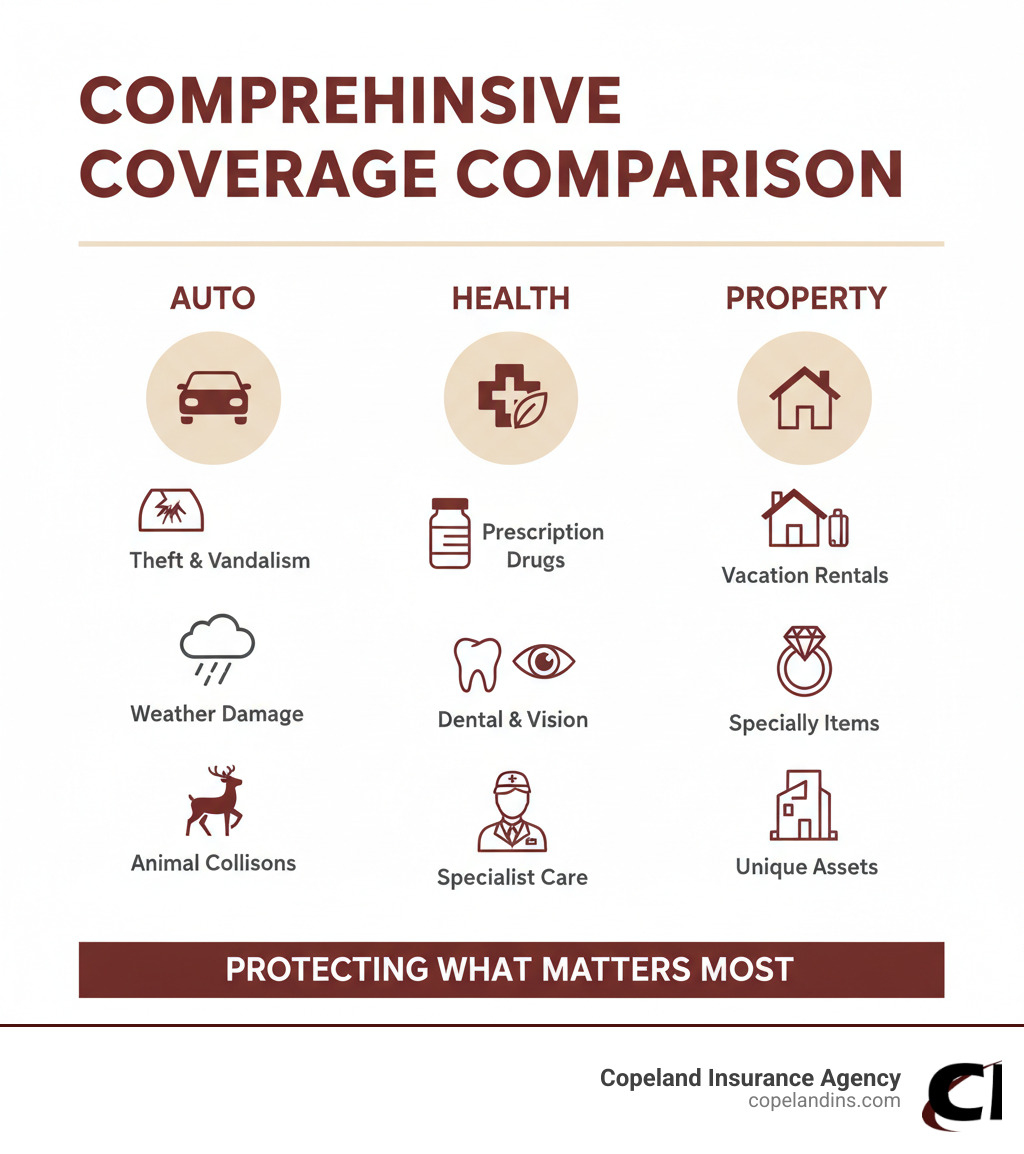
- Auto Insurance: Protects against theft, vandalism, fire, hail, falling objects, and animal collisions
- Health Insurance: Covers prescription drugs, dental, vision, and specialist care beyond government plans
- Property Insurance: All-risk policies for vacation rentals, specialty items, and unique assets
The name says it all – comprehensive coverage fills the gaps that basic insurance leaves behind. While collision coverage handles crashes with other vehicles, comprehensive steps in for everything else that could damage your car, home, health, or business.
One in five Canadians already relies on comprehensive health plans, and lenders often require comprehensive auto coverage for financed vehicles. Why? Because when a hailstorm damages your roof or a deer jumps into your path, you need protection that goes beyond the basics.
At Copeland Insurance Agency, we’ve spent over two decades helping Midwest business owners steer the complexities of comprehensive coverage plans that truly protect what matters most. Our experience has shown us that the right comprehensive coverage isn’t just about meeting requirements – it’s about sleeping soundly knowing you’re prepared for whatever comes next.
Understanding Comprehensive Coverage Plans for Your Vehicle
Your car is parked safely in your driveway when a sudden hailstorm rolls through Texas, leaving golf ball-sized dents across your hood. Or maybe you’re driving through Arizona when a deer decides to dart across the highway right into your path. These are exactly the moments when comprehensive coverage plans for your vehicle become your financial lifesaver.
Think of comprehensive auto insurance as your shield against Mother Nature and life’s unexpected surprises. While collision coverage handles crashes with other vehicles or objects, comprehensive steps in for everything else – those “other than collision” events that can damage or destroy your car when you least expect it.
Living in our service areas means facing unique risks. Arizona’s intense sun can crack dashboards and fade paint over time. Kansas and Texas see their fair share of severe weather, from tornadoes to hailstorms that can total a vehicle in minutes. And let’s not forget about wildlife encounters – hitting an animal is more common than you might think, especially on rural roads.
This type of coverage protects your investment from incidents largely beyond your control. Whether your car is stolen from a parking lot, vandalized overnight, or damaged by a falling tree branch during a storm, comprehensive coverage helps pay to repair or replace your vehicle. To learn more about the specifics, visit our page on What is Comprehensive Coverage?.
What Comprehensive Auto Insurance Covers (and What It Doesn’t)
Comprehensive coverage plans cast a wide protective net over your vehicle, but it’s important to understand exactly what falls under that protection. The good news? Most of the random, frustrating things that can happen to your car are covered.
Theft tops the list – if someone steals your vehicle, comprehensive coverage helps reimburse you for its value. Vandalism is another big one, covering malicious damage like keyed paint, broken windows, or slashed tires. Fire damage, whether from an engine problem or an external source, falls under comprehensive protection too.
Weather events make up a huge portion of comprehensive claims, especially in our region. Hail damage, wind damage, flood damage, lightning strikes, and even earthquake damage are typically covered. Falling objects – from tree branches during storms to debris from construction sites – are also included.
One of the most common comprehensive claims? Hitting an animal. Whether it’s a deer in Texas, a coyote in Arizona, or any other wildlife, these encounters are covered under comprehensive, not collision coverage.
Now for what comprehensive coverage doesn’t handle. Collisions with other vehicles or stationary objects like poles or fences require collision coverage instead. Normal wear and tear from daily driving isn’t covered – that’s just part of owning a car. Mechanical breakdowns like engine failure or transmission problems fall outside comprehensive coverage too, since these are maintenance issues rather than sudden, unexpected events.
It’s also worth noting that comprehensive coverage doesn’t pay for medical expenses if you’re injured during a covered incident – that’s what your medical payments or personal injury protection coverage handles.
For complete details on protecting your vehicle, explore our Auto Insurance options.
Is Comprehensive Coverage Required?
Here’s where things get interesting. Comprehensive coverage plans aren’t legally required by law in Kansas, Arizona, Texas, or any other state. But before you think you can skip it, there’s a big “but” coming.
If you’re financing or leasing your vehicle, your lender almost certainly requires both comprehensive and collision coverage. They have money invested in your car too, and they want to protect that investment from theft, weather damage, and other covered events. It’s written right into your loan or lease agreement, so it’s not really optional in these situations.
Own your car outright? Then the choice is entirely yours, but it’s worth thinking through carefully. Consider your vehicle’s current market value – if it’s newer or worth a significant amount, the cost of repairs or replacement after a major hail storm or theft could be financially devastating.
Actual Cash Value (ACV) plays a key role here. Comprehensive coverage pays out your vehicle’s ACV at the time of loss, which accounts for depreciation. For a brand-new truck, that could be $40,000 or more. For a 15-year-old sedan, it might only be $3,000.
Ask yourself: could you comfortably replace your car tomorrow if it was stolen or totaled by weather? If the answer is no, comprehensive coverage offers invaluable peace of mind for a relatively small monthly cost.
The Claims Process and Cost Factors
When life throws you a curveball and you need to file a comprehensive claim, the process is designed to be as smooth as possible during what’s already a stressful time.
Filing your claim starts with contacting Copeland Insurance Agency as soon as safely possible after the incident. Take photos of the damage if you can – they help speed up the process significantly. Most insurers offer multiple ways to file, whether online, through a mobile app, or over the phone.
Your deductible comes into play next. This is the amount you pay out-of-pocket before your coverage kicks in. If you chose a $500 deductible and have $2,000 in hail damage, you pay $500 and your insurance covers the remaining $1,500.
Payout limits are typically based on your vehicle’s actual cash value. If your car is totaled, you’ll receive the ACV minus your deductible. For repairs, you’ll get the repair cost minus your deductible, up to your vehicle’s ACV.
Several factors influence what you’ll pay for comprehensive coverage. Vehicle type matters – luxury cars and sports cars typically cost more to insure than basic sedans. Your location plays a huge role too. Living in an area prone to severe weather, high theft rates, or frequent deer crossings will increase your premium.
Your driving history can affect costs as well, even though comprehensive claims are typically no-fault situations. The deductible amount you choose creates a direct trade-off – higher deductibles mean lower monthly premiums but more out-of-pocket expense when you file a claim.
For detailed information about specific automotive components and systems typically covered, check out our comprehensive guide on covered automotive parts.
Comprehensive Coverage in Health Insurance
When you think about comprehensive coverage plans, your mind probably jumps straight to car insurance. But here’s the thing – comprehensive coverage is just as important for your health as it is for your vehicle. While government health plans provide a solid foundation, they often leave gaps that can create unexpected financial burdens when you need medical care most.
At Copeland Insurance Agency, we’ve seen how the right health coverage can make the difference between a minor inconvenience and a major financial setback. That’s why our Employee Benefits solutions focus on filling those crucial gaps that basic coverage leaves behind.
Think of it this way: your government health plan is like having liability insurance on your car – it covers the basics, but what happens when you need something more? Comprehensive coverage plans for health insurance step in to cover prescription medications, dental work, vision care, and specialized treatments that can dramatically impact both your health and your wallet.
What are comprehensive coverage plans for health insurance?
Comprehensive coverage plans in health insurance are like having a Swiss Army knife for your medical needs – they’re designed to handle a wide variety of situations that basic government plans simply don’t cover. These plans recognize that true healthcare goes beyond emergency room visits and basic doctor appointments.
The beauty of comprehensive health coverage lies in its breadth. Prescription drugs often represent the largest portion of coverage, helping you afford everything from daily medications to specialized treatments. Dental care extends beyond just emergency procedures to include routine cleanings, fillings, and even orthodontic work depending on your plan level.
Vision care ensures you can see clearly without breaking the bank, covering eye exams, glasses, and contact lenses. Access to specialists and therapists – including chiropractors, physiotherapists, massage therapists, and mental health professionals – means you can address health issues before they become major problems.
The coverage often extends to medical equipment like CPAP machines or mobility aids, recognizing that health needs can change unexpectedly. Many plans also include emergency medical travel protection, which is particularly valuable if you’re traveling outside your home province or country.
So who benefits most from comprehensive health coverage? Self-employed individuals who don’t have access to group plans find these invaluable. Retirees transitioning away from workplace benefits often find that comprehensive plans help bridge the gap between employer coverage and retirement reality.
Even if you have group insurance through work, you might find gaps that a personal comprehensive plan can fill. Sometimes it’s about higher coverage limits, sometimes it’s about services your employer plan doesn’t include. And honestly, sometimes it’s just about peace of mind – knowing that when health challenges arise, you won’t face overwhelming out-of-pocket expenses.
Comparing Different Health Plan Tiers
Just like choosing between different levels of auto insurance, comprehensive coverage plans for health insurance come in various tiers designed to match different needs and budgets. The key is understanding what each level offers so you can make an informed decision about your family’s health protection.
Basic plans serve as an excellent starting point, especially if you’re relatively healthy and want essential coverage without a hefty premium. These typically offer around 60% reimbursement for prescription drugs up to modest annual maximums, basic dental coverage for preventive care, and limited vision benefits. While the coverage amounts are smaller, they still provide meaningful protection against unexpected health costs.
Standard plans represent the sweet spot for many families, offering significantly improved benefits that justify the moderate increase in premium. You’ll often see prescription drug coverage jump to 70% reimbursement with much higher annual maximums – sometimes covering thousands of dollars in eligible expenses. Dental coverage expands to include more procedures, and vision care becomes more comprehensive with better reimbursement rates and shorter waiting periods.
Improved or premium plans provide the most robust protection available, featuring the highest reimbursement percentages and coverage limits. These plans might offer 80% prescription drug coverage for initial amounts, then jump to 100% coverage for higher expenses. Dental maximums can reach $1,750 or more annually, vision care might cover $300 every two years, and extensive paramedical services ensure you have access to a wide range of healthcare professionals.
The differences between these tiers go beyond just dollar amounts. Reimbursement percentages determine how much you’ll pay out of pocket for covered services. Annual maximums set the ceiling for what your plan will pay each year. Waiting periods affect when certain benefits become active after you enroll.
Some specialized options like guaranteed acceptance plans require no medical questions and cover pre-existing conditions, while assured access plans offer flexibility to pause and resume coverage as your life circumstances change.
Understanding these distinctions helps you choose comprehensive coverage plans that truly align with your health needs and financial situation. For personalized guidance on which tier makes sense for your family, we encourage you to Contact Copeland Insurance Agency for plan options. We’ll help you steer the options and find coverage that provides both protection and peace of mind.
Comprehensive Protection for Property and Specialty Items
When most people think about comprehensive coverage plans, their minds jump straight to cars and health insurance. But here’s the thing – your protection needs don’t stop there. Whether you own a vacation rental in sunny Arizona or that amazing mountain bike you take on weekend adventures, specialized assets require specialized coverage.
The beauty of comprehensive protection lies in what insurance professionals call “all-risk” policies. These go far beyond the basics, covering everything except what’s specifically excluded. It’s like having a safety net with much smaller holes. For business owners, this often falls under our Business Insurance solutions, while individuals might need coverage for unique personal assets that standard homeowner policies simply can’t handle properly.
Comprehensive Insurance for Vacation Rentals
Picture this: you’ve got a beautiful property that you rent out to vacationers. Maybe it’s a cozy cabin in Texas or a desert retreat in Arizona. The moment you start accepting paying guests, your home transforms from a personal dwelling into a business operation. And guess what? Your regular homeowners insurance wasn’t designed for that.

This is where comprehensive coverage plans for vacation rentals become your best friend. These “all-risk” policies understand the unique challenges you face as a host. When a guest accidentally breaks that expensive coffee table or a hailstorm damages your roof (and we know how intense those can get in our service areas), you need coverage that gets it.
Commercial general liability becomes crucial because you’re now dealing with the public. If a guest slips on your freshly mopped floor or claims your property description was misleading, you need protection from those business-related claims.
Property damage coverage protects your investment against fire, theft, vandalism, and those unpredictable weather events we see across Arizona and Texas. But here’s where it gets really smart – business income coverage steps in when disaster strikes. If your property becomes uninhabitable due to covered damage, this coverage helps replace the rental income you’re losing while repairs happen.
The best comprehensive vacation rental policies also cover those unique risks you might not think about. We’re talking about bed bug cleanup (every host’s nightmare), higher liability limits for extra peace of mind, and even building ordinance coverage if local codes require upgrades during repairs. Some policies even include limited liquor coverage, so you can leave that welcome bottle of wine without worrying about liability issues.
Ready to protect your vacation rental investment? Request a free quote today! to explore your options.
Key Components of Comprehensive Coverage Plans for Specialty Items
Let’s talk about your prized possessions – that high-end bicycle, vintage guitar, or professional camera equipment. Your Homeowners Insurance might offer some coverage, but it’s often like trying to fit a square peg in a round hole.

Take bicycle insurance as a perfect example. Your homeowners policy might have a $1,000 limit for bike theft, but what good is that when your carbon fiber road bike cost $5,000? Specialized comprehensive coverage plans understand that your bike isn’t just transportation – it’s a significant investment and passion.
Theft protection under specialized coverage typically covers the full replacement cost of your bike, not just some arbitrary sub-limit. But here’s where it gets really interesting – crash damage coverage. If you hit a pothole and crack your frame, or take a tumble on a trail, your homeowners policy likely won’t help. Comprehensive bicycle coverage? It’s got your back.
The difference between replacement cost and actual cash value becomes huge with specialty items. While standard policies often pay depreciated value, comprehensive specialty coverage typically offers full replacement cost. That means getting a brand-new equivalent, not a check for what your three-year-old bike is “worth” on paper.
Many comprehensive plans also cover your cycling apparel and spare parts if they’re damaged or stolen along with your bike. Plus, you get liability coverage if you accidentally injure someone while riding, and medical payments for your own injuries.
For those electric bike enthusiasts (and there are plenty in our Arizona and Texas markets), specialized coverage includes specific provisions for e-bikes, covering those expensive batteries and motors that standard policies often exclude.
The bottom line? Generic policies aren’t designed for your unique assets and the specific risks they face. Comprehensive coverage plans ensure your special possessions get the specialized protection they deserve.
Frequently Asked Questions about Comprehensive Coverage
We hear a lot of questions about insurance at Copeland Insurance Agency, and we get it – sometimes insurance feels like it’s written in another language! Let’s clear up some of the most common questions about comprehensive coverage plans that come up in our conversations with clients.
How does comprehensive coverage differ from collision coverage?
This is probably the question we answer most often, and for good reason – the difference is crucial to understand!
Collision coverage steps in when your car crashes into something or something crashes into your car. Whether you hit another vehicle, slam into a tree, or collide with a guardrail, collision coverage handles the damage to your vehicle. It doesn’t matter who caused the accident – your collision coverage pays for your car’s repairs after you pay your deductible.
Comprehensive coverage is for all those other times when life happens to your car. Think of it as protection against the unexpected events that aren’t collisions. When a hailstorm pounds your car in a Texas parking lot, when vandals key your vehicle overnight, or when a deer jumps into your path on an Arizona highway, comprehensive coverage comes to the rescue.
Here’s a simple way to remember it: if you hit something, that’s collision. If something happens to your car without you hitting anything (except animals), that’s comprehensive. Each type of coverage has its own separate deductible, so you’ll pay different amounts out-of-pocket depending on what type of claim you’re filing.
Is comprehensive coverage worth it for an older car?
This question comes up a lot, especially when clients are trying to balance their budget with their peace of mind. The answer really depends on your specific situation.
The key factor is your car’s Actual Cash Value (ACV) – what your car is actually worth today, not what you paid for it years ago. Comprehensive coverage pays out based on this depreciated value, which might be surprisingly low for an older vehicle.
Let’s say you’re paying $300 a year for comprehensive coverage on a 2010 sedan that’s worth $3,000. If it gets totaled by hail damage and you have a $500 deductible, you’d receive $2,500 from your insurance. That might feel worth it. But if that same car is only worth $1,200 and you still have that $500 deductible, you’d only get $700 back – suddenly that annual premium doesn’t look as attractive.
Your financial comfort level plays a big role too. Can you easily replace your car out-of-pocket if it’s stolen or destroyed? If money’s tight, even that smaller payout might be crucial. Plus, consider where you live and park your car. High crime areas, frequent severe weather, or lots of wildlife crossings might tip the scales toward keeping comprehensive coverage.
The bottom line? For very old cars with minimal value, you might be better off saving those premium dollars. But if your older car still has decent value or if replacing it would strain your budget, comprehensive coverage can still provide valuable protection.
Can I have comprehensive coverage without collision coverage?
Absolutely! Since you own your car outright, you have the freedom to mix and match your coverage however makes sense for your situation. Many of our clients choose exactly this combination, and it can be a smart financial move.
This setup works particularly well for cars that spend most of their time parked safely but still have value you want to protect. Maybe you have a classic car that rarely sees the road, or perhaps you drive very little and are more worried about theft or weather damage than accidents. Comprehensive coverage plans without collision can give you that targeted protection.
Though – if you choose this route and end up in an accident with another vehicle or object, you’ll be paying for your car’s repairs entirely out of your own pocket. That’s a risk some people are comfortable taking, especially on older vehicles where collision premiums might be high relative to the car’s value.
The beauty of working with Copeland Insurance Agency is that we can help you think through these choices and customize your Auto Insurance policy to match both your budget and your comfort level. Every driver’s situation is different, and we’re here to help you find the right balance of protection and affordability.
Securing Your Comprehensive Protection
When we think about everything we’ve covered, it becomes clear that comprehensive coverage plans aren’t just another checkbox on your insurance to-do list. They’re your financial lifeline when the unexpected happens – whether that’s a hailstorm pummeling your car in Kansas, a medical emergency that goes beyond basic coverage, or a guest getting injured at your vacation rental in Arizona.
The beauty of comprehensive protection lies in how it adapts to your unique situation. Maybe you’re a business owner who needs robust coverage for specialty equipment, or perhaps you’re approaching retirement and want to ensure your health coverage doesn’t have gaps. Whatever your circumstances, the right comprehensive coverage gives you something invaluable: the ability to sleep soundly at night.

At Copeland Insurance Agency, we’ve built our reputation on understanding that no two clients are exactly alike. What works for a young family in Texas might not be the best fit for a retiree in Arizona. That’s why we take the time to understand your specific needs, your budget, and your concerns before recommending any coverage.
Our approach is simple: we listen first, then we help you build a protection strategy that makes sense. Whether you’re looking to protect your vehicle from everything except collisions, ensure your family has access to comprehensive health benefits, or safeguard unique assets like vacation rentals, we’re here to guide you through the process.
We know that insurance conversations can sometimes feel overwhelming – there are deductibles to consider, coverage limits to understand, and countless options to weigh. But here’s what we’ve learned after years of serving clients across nine states: the right comprehensive coverage isn’t about having the most expensive policy. It’s about having the right policy for your life.
Ready to take the next step in protecting what matters most to you? We’d love to chat about your specific needs and show you how comprehensive coverage can work for your situation.
Contact Us today for a personalized consultation where we can discuss your unique circumstances and explore your options together.
Don’t forget to explore your Home Insurance options as well – after all, comprehensive protection works best when all your assets are properly covered.