

Business auto insurance cost: 7 Powerful Savings in 2025
Understanding Business Auto Insurance Costs in 2024
Business auto insurance cost typically ranges from $147 to $270 per month ($1,762 to $3,240 annually) for a single vehicle, though prices vary significantly based on several factors:
- Average monthly cost by industry:
- Auto services: $69
- Media & advertising: $92
- Construction & contracting: $173
- IT & technology: $198
-
Food & beverage: $152
-
Average monthly cost by vehicle type:
- Standard business auto: $270
- Contractors: $257
- For-hire specialty trucks: $767
- For-hire transport trucks: $1,041
-
Tow trucks: $600
-
Cost-influencing factors:
- Vehicle type and usage
- Driving records and claims history
- Coverage limits and deductibles
- Business location and industry
- Number of vehicles insured
If you’re a small business owner with company vehicles, understanding these costs is crucial for budgeting and protection. Whether you operate a single car for client visits or manage a fleet of delivery vans, commercial auto insurance safeguards your business from potentially devastating financial losses after an accident.
I’m Vonda Copeland, CPIA, CWCU, with over two decades of experience helping businesses steer the complexities of business auto insurance cost through my agency, Copeland Insurance Agency, where we specialize in creating customized coverage solutions that balance protection with affordability.
What Is Business (Commercial) Auto Insurance?

When your business depends on vehicles – whether it’s a single car for client visits or a fleet of trucks – you need protection that goes beyond what personal auto insurance offers. That’s where business auto insurance (also called commercial auto insurance) comes in.
Think of business auto insurance cost as an investment in your company’s security. This specialized coverage protects vehicles used for business purposes, addressing the unique risks that come with commercial driving activities.
Your typical commercial auto policy bundles several important protections. Liability coverage handles the costs when your business vehicles cause injury or property damage to others – often the most significant financial risk you face. Collision coverage repairs your vehicles after accidents regardless of who’s at fault, while comprehensive coverage steps in for non-collision incidents like theft, vandalism, or hail damage.
Many business owners appreciate having medical payments coverage to handle injuries to drivers and passengers, regardless of fault. And in today’s world where many drivers carry minimal insurance, uninsured/underinsured motorist coverage provides crucial protection.
One often-overlooked benefit is hired and non-owned auto insurance (HNOA), which protects your business when employees use their personal vehicles or rental cars for work purposes – a common scenario for many small businesses.
Key Differences From Personal Auto Policies
Your business faces different risks than you do as an individual driver, and your insurance should reflect that. Commercial auto policies typically offer much higher liability limits – often $1 million or more – because business accidents can lead to more expensive claims and lawsuits.
While personal policies usually exclude or severely limit business use, commercial policies are built specifically for it. They’re designed to handle multiple drivers and employees using your vehicles, which personal policies rarely accommodate well.
The way your policy is priced differs too. Insurance companies look at business-specific factors like what type of cargo you carry, how far your vehicles travel, and what industry you’re in. These elements create a risk profile that’s quite different from personal auto insurance.
Consider this real-world scenario: If your employee has an accident while making a delivery in a company truck, your commercial policy would typically cover the damages. But if they were using their personal car with only a personal auto policy, that claim might be denied since it happened during business use – leaving you potentially exposed to a significant financial loss.
When Your Personal Car Needs a Commercial Policy
Many small business owners are surprised to learn they might need commercial coverage even when using their personal vehicles. You should consider a commercial policy if your vehicle is titled or registered to your business entity rather than to you personally.
Regular transportation of goods or products is another clear indicator – whether you’re moving equipment between job sites or delivering items to customers. This includes food delivery, package services, or transporting any items for payment.
The rideshare industry has highlighted this need as well – if you’re transporting people for fees, your personal policy likely won’t provide adequate coverage.
Do your employees regularly drive your personal vehicle for business tasks? That’s another situation where commercial coverage becomes essential. Even seemingly routine activities like visiting multiple client sites throughout your workday can fall into a coverage gap with personal insurance.
Vehicles with permanently installed equipment like ladder racks, toolboxes, or specialized machinery generally need commercial coverage too – these modifications change how insurers view your vehicle’s use and risk.
Even occasional business use can leave you vulnerable. A consultant who regularly drives to client meetings might find their personal policy won’t cover an accident during these business trips – a potentially costly surprise.
If you’re wondering whether your current policy adequately protects your business activities, the team at Copeland Insurance Agency can evaluate your specific situation and recommend appropriate coverage. With our experience serving businesses across nine states, we understand the nuances of business auto insurance cost and coverage needs for various industries and vehicle uses.
Average Business Auto Insurance Cost in 2024
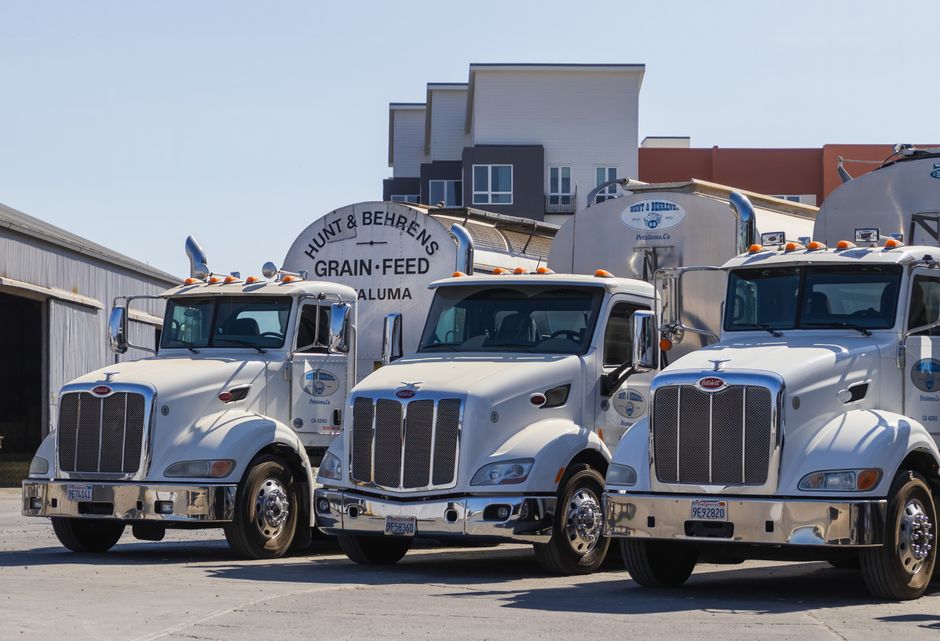
When you’re running a business with vehicles, knowing what to expect for insurance costs helps you plan your budget without surprises. Let’s break down what most businesses are paying in 2024 so you can get a clearer picture of what your business auto insurance cost might look like.
National & Statewide Averages for Business Auto Insurance Cost
If you’re wondering about the “typical” cost, most businesses pay between $147 and $270 monthly per vehicle (that’s $1,762 to $3,240 yearly). But these numbers only tell part of the story, since they blend together everything from small sedans to large trucks across all industries.
Different insurance companies report different averages too:
Insureon says their median premium sits at $147 monthly, while Progressive customers average around $270 monthly for standard coverage. The Hartford reports their customers typically pay about $574 monthly ($6,884 yearly).
Why such different numbers? Well, median figures (the middle point of all premiums) often give small business owners a more realistic expectation than averages, which can get pulled up by those super-expensive policies for large fleets or high-risk businesses.
Where your business calls home matters tremendously too. Florida businesses, for example, pay about $266 monthly – well above the national median – because of higher accident rates and more insurance fraud cases in the Sunshine State.
Your specific location within a state makes a difference too. A food delivery business in a quiet town like Manhattan, Kansas will typically pay less than the same business operating in busier Topeka, simply because there’s less traffic and fewer accidents where they’re based.
Business Auto Insurance Cost by Industry & Vehicle
What your business does and what vehicles you use dramatically impact what you’ll pay. Construction businesses, for instance, pay an average of $173 monthly, while media and advertising companies pay just $92.
Here’s how the costs break down across different industries:
Auto services tend to pay the least at around $69 monthly, while IT and technology businesses pay nearly triple that at $198. Food and beverage businesses fall in the middle at about $152 monthly.
The type of vehicle you’re insuring matters even more:
A basic sedan might cost just $124 monthly to insure for business use, while a semi-truck jumps to $838. Specialty vehicles like tow trucks average around $600 monthly, and for-hire transport trucks can reach over $1,000 monthly.
These variations show why it’s so important to get quotes based on your specific situation rather than relying on general averages.
Business Auto Insurance Cost Per Coverage Level
The protection level you choose directly affects what you’ll pay:
Liability-only coverage gives you the bare minimum legal protection at the lowest cost (typically $60-100 monthly per vehicle). This meets your legal obligations but leaves your own vehicles unprotected if something happens.
Full coverage with comprehensive and collision protection costs about 30-50% more, but it’s worth considering since it protects your vehicles against theft, weather damage, and accidents regardless of fault.
Your policy limits make a big difference too. State minimum limits will save you money upfront but could leave your business exposed to major losses. Most businesses find that the premium difference between minimal coverage and a $1 million combined single limit provides peace of mind worth paying for.
Your deductible choice offers another way to control costs. Opting for a $2,500 deductible instead of $500 will lower your monthly premium significantly, but means you’ll pay more out-of-pocket when filing a claim.
According to industry data, most business owners choose at least $1 million in coverage limits, recognizing that adequate protection is worth the modest premium increase compared to minimum coverage.
At Copeland Insurance Agency, we help you steer these options to find the right balance between protection and affordability for your specific business needs.
Factors That Influence Your Premium
What drives your business auto insurance cost isn’t a mystery—it’s a collection of factors that insurers carefully weigh when calculating your premium. Understanding these elements helps you make smarter coverage decisions and might even reveal opportunities to save money without compromising protection.
Vehicle & Driver Characteristics
Your vehicles themselves play a major role in determining your rates. Newer, more expensive vehicles naturally cost more to insure since they’re pricier to repair or replace after an accident. The type and size matter too—that heavy-duty pickup will generally command higher premiums than a compact sedan because of its potential to cause more significant damage in an accident.
Don’t overlook safety features, though. Those anti-lock brakes, electronic stability controls, and backup cameras aren’t just convenient—they can actually qualify you for discounts since they reduce accident likelihood. Insurers also examine your vehicles’ VINs to verify safety ratings, check recall histories, and assess theft probability.
The people behind the wheel matter just as much as the vehicles themselves. Drivers with clean records are insurance gold, while those with accidents or violations will drive up your costs. Age and experience factor in too—younger, less experienced drivers typically increase premiums. For specialized vehicles, having properly licensed drivers with CDLs can actually help reduce your rates. That’s why regular MVR checks (motor vehicle record reviews) are so valuable—they help identify high-risk drivers before they become costly problems.
A real-world example makes this clear: a landscaping company with newer trucks driven by experienced employees with spotless driving records will almost certainly pay less than a similar company using older vehicles with drivers who have multiple violations.
Business Operations & Industry Risk
Your day-to-day operations significantly impact your insurance costs in ways you might not expect. Different industries face different risk profiles—a construction company’s vehicles face different hazards than those of an accounting firm.
How far your vehicles travel matters too. Vehicles that regularly venture far from home base typically cost more to insure than those that stay local. What you’re carrying also affects your premium—transporting hazardous materials or valuable goods naturally increases risk and therefore costs.
Your usage patterns tell insurers a lot about your risk level. Vehicles with high mileage or those making frequent stops face greater exposure to potential accidents. Seasonal businesses might see different rating structures to account for fluctuations in activity levels. And if you’re subject to Department of Transportation or FMCSA regulations, you’ll likely need higher coverage limits, affecting your bottom line.
This explains why a food delivery service making dozens of daily stops in busy urban areas will typically pay more than a consulting firm whose vehicles primarily make occasional client visits in suburban settings.
Policy Design Choices
The way you structure your policy directly impacts what you’ll pay. Higher liability limits provide better protection but increase premiums. Conversely, opting for higher deductibles lowers your monthly costs but means more out-of-pocket expenses when claims occur.
Adding specialized coverages like rental reimbursement or roadside assistance provides valuable protection but increases costs. Some businesses save by restricting coverage to specific named drivers rather than permitting anyone to operate company vehicles. And sometimes, umbrella policies that extend coverage limits prove more cost-effective than raising individual policy limits.
Other significant factors affecting your premium include:
- Credit score – Many insurers review your business credit information as a rating factor
- Claims history – Previous claims, even when you weren’t at fault, often result in higher premiums
- Garage location – Where you store vehicles affects theft and damage risk assessments
- Equipment add-ons – Permanently attached equipment like ladder racks increases vehicle value
- Fleet size – The number of vehicles insured can impact per-vehicle rates, with larger fleets often qualifying for discounts
Your business location also plays a crucial role in determining insurance requirements, such as the minimum amount of auto liability insurance coverage mandated by your state.
At Copeland Insurance Agency, we carefully analyze these factors to help our clients throughout our nine-state service area find that sweet spot between comprehensive coverage and affordable premiums. Whether you need standard commercial auto coverage or specialized Commercial Truck Insurance, we’ll help you steer these factors to find the right protection at the right price.
Smart Ways to Lower Business Auto Insurance Cost

Let’s face it – business auto insurance cost is a necessary expense, but that doesn’t mean you have to break the bank. At Copeland Insurance Agency, we’ve helped countless Kansas businesses find smart ways to trim their premiums while keeping their vehicles properly protected. The good news? You don’t have to sacrifice coverage to save money.
Risk-Reduction Tactics That Pay Off
The best way to lower your insurance costs is to become less risky in the eyes of your insurer. Think of it as a partnership – you reduce potential claims, and they reduce your premiums.
Investing in driver training programs makes a tremendous difference. When your team knows defensive driving techniques, they’re less likely to end up in fender benders that drive up your rates. One of our clients, a plumbing company in Wichita, saw a 12% premium reduction after implementing quarterly driver safety meetings and a formal vehicle usage policy.
Telematics and AI dashcams have revolutionized fleet management. These nifty devices track driving behaviors like harsh braking and speeding, giving you insights to coach your drivers. Many insurers offer substantial discounts – sometimes 5-15% – when you install these systems. As a bonus, you’ll likely see fuel savings and fewer repair bills too!
Regular vehicle maintenance isn’t just good for your cars and trucks – it’s good for your insurance rates. Well-maintained vehicles are less likely to cause accidents due to mechanical failures. Many of our clients follow a strategic replacement cycle, keeping their fleets modern and equipped with the latest safety features that insurers love to reward with discounts.
Smart route planning reduces time on the road and exposure to risk. A landscaping client of ours in Topeka used GPS optimization to cut their annual mileage by 15%, which translated to an 8% premium reduction at their next renewal. Sometimes the simplest solutions yield the best results!
Money-Saving Coverage Adjustments
When it comes to immediate savings, adjusting your policy structure can make a big difference.
Raising your deductibles is perhaps the quickest way to lower your business auto insurance cost. Moving from a $500 to $1,000 deductible typically saves 10-15% on premiums. Just be sure your business has the cash reserves to cover that higher deductible if needed. One delivery company we work with in Manhattan created a dedicated claims fund for minor incidents while maintaining coverage for major losses – a smart self-insurance strategy.
Taking a fresh look at your coverage limits can uncover savings opportunities. Many businesses carry identical limits across their entire fleet, but this one-size-fits-all approach isn’t always cost-effective. Your newer, more valuable vehicles might need higher limits, while older vehicles might need less. We helped a construction company in Salina save over $2,200 annually by tailoring coverage to each vehicle’s actual value and use.
Don’t overlook multi-vehicle discounts. Insurers love fleets because they spread risk across multiple vehicles. The more vehicles you insure together, the lower your per-vehicle rate typically becomes. We’ve seen businesses save 8-12% just by consolidating all their vehicles onto a single policy.
Bundling & Complementary Coverages
Insurance companies love loyal customers, and they’re often willing to show their appreciation through substantial discounts.
Bundling your commercial auto with other business policies is perhaps the easiest way to save. Combining with general liability typically saves 10-15% across both policies. A Business Owner’s Policy (BOP) that includes auto coverage often provides even better value than separate policies. We recently helped a retail business in Overland Park save over $3,400 annually through strategic policy bundling.
How you pay matters too. Annual payments instead of monthly installments usually save 5-10% right off the bat. Many insurers also offer discounts for paperless billing and automatic payments. These small adjustments add up quickly!
Loyalty has its rewards in the insurance world. Many carriers offer increasing discounts the longer you stay with them, especially if you maintain a clean claims record. Some of our long-term clients enjoy loyalty discounts of 5-15% just for sticking around and driving safely.
At Copeland Insurance Agency, we specialize in finding these hidden savings opportunities for businesses across Kansas and our other service states. We’d love to review your current coverage and show you how our personalized approach to Business Auto Insurance can protect your fleet while being kind to your bottom line.
Coverage Options, Vehicles & State Requirements

The world of commercial vehicles is surprisingly diverse, and understanding what vehicles need coverage—and how state requirements affect your business auto insurance cost—can make a significant difference to your bottom line.
Vehicles Commonly Covered
From sedans to semis, commercial auto insurance covers virtually any vehicle your business might use. At Copeland Insurance Agency, we’ve seen it all—from the consultant with a single company car to full fleets of specialized equipment.
Passenger vehicles form the backbone of many business fleets. These include company cars driven by your executives and sales team, pool vehicles that employees share for running business errands, and sometimes even personal vehicles regularly used for work purposes (though these often require special endorsements).
For many small businesses, light-duty commercial vehicles are essential workhorses. Your landscaping company’s pickup trucks, the cargo vans your plumbers use for service calls, or the SUV your real estate agents drive to showings—all need proper commercial coverage that reflects their business use.
The needs change dramatically when we move to medium and heavy-duty vehicles. Your box truck making local deliveries, the flatbed hauling construction materials, or utility trucks with specialized equipment like cherry pickers or bucket lifts face different risks and regulatory requirements, which directly impact insurance needs.
Some businesses operate truly specialized commercial vehicles that require custom coverage. We’ve helped tow truck operators in Abilene secure proper on-hook coverage, worked with food service companies in Topeka to insure refrigerated delivery vehicles, and provided solutions for clients with everything from concrete mixers to semi-trucks.
Essential & Optional Policy Endorsements
The standard commercial auto policy is just the starting point—think of it as the foundation of a house. The endorsements you add are like the rooms that make it truly functional for your specific needs.
Some endorsements are practically essential for most businesses. Hired and Non-Owned Auto (HNOA) coverage protects you when employees use their own cars for work tasks or when you rent vehicles. This coverage has saved many of our clients from significant out-of-pocket expenses after accidents involving employee-owned vehicles.
Similarly, Uninsured/Underinsured Motorist coverage is a wise addition considering how many drivers on the road carry minimal or no insurance. One of our clients, a delivery service in Kansas, avoided a $75,000 loss when their driver was hit by an uninsured motorist, thanks to this coverage.
Medical Payments coverage provides an extra layer of protection by covering medical expenses regardless of fault, which can help maintain good relationships with employees and avoid potential litigation.
Beyond these basics, your business might benefit from more specialized options. If you frequently load and unload cargo, Loading and Unloading Liability can close a potentially expensive coverage gap. Businesses that temporarily hold customer vehicles—like auto repair shops or valet services—should consider Garagekeepers Coverage to protect against damage to those vehicles while in your care.
For businesses that transport goods, Motor Truck Cargo coverage protects the items you’re hauling. Towing companies benefit from On-Hook Coverage for vehicles being towed, while companies transporting potentially hazardous materials should consider Pollution Liability to cover cleanup costs from accidental spills.
How State Laws Shape Business Auto Insurance Cost
Your business auto insurance cost is significantly influenced by where you operate, as each state sets its own rules for commercial vehicles.
Minimum liability requirements vary widely from state to state. While Kansas requires 25/50/25 coverage ($25,000 bodily injury per person, $50,000 per accident, $25,000 property damage), neighboring states may have completely different standards. Texas, for instance, requires 30/60/25 coverage, while Arizona mandates just 15/30/10.
The state’s approach to fault also matters. No-fault states require Personal Injury Protection (PIP) coverage, which typically increases your premiums but provides important benefits. Tort states follow traditional liability systems where the at-fault party’s insurance pays for damages.
Heavier vehicles face additional regulatory problems. Vehicles over 10,000 pounds often must comply with both state regulations and Federal Motor Carrier Safety Administration (FMCSA) rules. If your business crosses state lines, you’ll need to meet the requirements for interstate commerce, which typically means higher coverage limits and possibly filing proof of insurance through Form E filings.
Companies transporting hazardous materials or passengers generally face the strictest requirements of all, with substantially higher mandatory coverage limits that directly impact your business auto insurance cost.
At Copeland Insurance Agency, we stay up-to-date on the requirements in all nine states where we’re licensed. This allows us to ensure our clients remain compliant while still finding the most cost-effective coverage options. For businesses operating across multiple states, we typically recommend coverage that satisfies the highest requirements of any state where you operate—this approach provides continuous protection without the complexity of managing different policies for different locations.
Frequently Asked Questions about Business Auto Insurance
Is commercial auto insurance required by law?
Yes, if you own business vehicles, commercial auto insurance isn’t just a good idea—it’s the law in every state across America. While the specific requirements vary depending on where you operate, all states mandate at least basic liability coverage to protect others from bodily injury and property damage your vehicles might cause.
The rules get even stricter for certain types of commercial vehicles. If your business operates vehicles weighing over 10,000 pounds or if you cross state lines, federal regulations kick in too. The Federal Motor Carrier Safety Administration typically requires much higher liability limits—often $750,000 or more depending on what you’re hauling.
Here’s something many business owners don’t realize: even when you use your personal vehicle for business tasks, your personal auto policy probably won’t cover you. Most personal policies specifically exclude or severely limit coverage for business use, creating a dangerous gap in your protection that could leave your company financially exposed after an accident.
At Copeland Insurance Agency, we work closely with businesses across Kansas and our other service areas to ensure you understand exactly what coverage you need to stay legally compliant while properly protecting your business assets.
What’s NOT covered under a standard policy?
Even the best commercial auto policy has limitations, and knowing these gaps is just as important as understanding your coverage. Standard policies typically don’t cover:
When family members or friends borrow company vehicles for personal errands, you’re likely not covered. The same goes for any non-business-related use outside your policy’s scope. This distinction between business and personal use is critical—if an employee takes a company truck to move their furniture on the weekend, that’s probably not covered.
Business auto insurance cost often doesn’t include protection for intentional damage, such as deliberate acts causing harm or damage resulting from illegal activities. If an employee deliberately rams another vehicle or uses your company car during a crime, don’t expect your insurer to help.
Without specific endorsements, standard policies exclude certain vehicle types like rented trucks (requires hired auto coverage) and employee-owned vehicles used for work tasks (requires non-owned auto coverage). That expensive specialized equipment mounted on your work vehicles? That needs separate coverage too.
Cargo presents another common exclusion. Hazardous materials require special endorsements, as do high-value items and perishable goods. A plumber transporting standard tools is covered differently than a jeweler transporting diamonds or a company moving hazardous chemicals.
Finally, if you’re using vehicles for activities you haven’t disclosed to your insurer, operating outside your declared geographic territory, or carrying more passengers than your vehicle is rated for, you might find yourself without coverage when you need it most.
How do I get a fast quote and what info will I need?
Getting a quick, accurate quote for your commercial auto coverage doesn’t have to be complicated, but having the right information ready will definitely speed things up.
First, have your basic business details at hand: your legal business name, entity type (LLC, corporation, etc.), tax ID number, years in business, and a clear description of what your business does. We’ll also need to know how many employees drive for business purposes.
For each vehicle you want to insure, gather the year, make, and model information, along with Vehicle Identification Numbers (VINs). For trucks and commercial vehicles, know the gross vehicle weight. Be prepared to estimate annual mileage for each vehicle, where they’re primarily parked overnight, and any special equipment attached to them.
Driver information is equally important. We’ll need names, birth dates, and driver’s license numbers for everyone who operates your vehicles, along with their driving history (accidents, violations, claims) and commercial driving experience. If any drivers have Commercial Driver’s Licenses (CDLs), note their classifications.
Finally, think about your coverage preferences: What liability limits do you want? What deductibles make sense for your business? Do you need specialized coverage for cargo or equipment?
At Copeland Insurance Agency, we’ve streamlined this process to make it as painless as possible. Our team guides businesses through these questions efficiently in all our service areas including Manhattan, Abilene, Junction City, Overland, Marysville, Riley, Salina, Topeka, and Wamego, KS.
With this information in hand, we can typically provide initial business auto insurance cost estimates within 24-48 hours, with straightforward policies often quoted the same day. We’re here to help you protect your business vehicles without unnecessary hassle or confusion.
Conclusion
Understanding business auto insurance cost is essential for making informed decisions about protecting your company’s vehicles while managing your budget effectively. As we’ve explored, premiums vary widely based on numerous factors including industry, vehicle types, coverage selections, and location.
The national average of $147-$270 per month provides a useful benchmark, but your specific costs will depend on your unique business circumstances. By implementing the risk-reduction strategies and coverage optimizations we’ve discussed, you can potentially reduce your premiums by 15-30% while maintaining robust protection.
At Copeland Insurance Agency, we’re not just about selling policies – we’re about building relationships with businesses across Kansas and our other service areas. Our team takes the time to understand what makes your business tick, recommend appropriate coverage that fits your operation, and identify real opportunities for savings without leaving you vulnerable.
We’ve seen how the right insurance strategy can make a difference for businesses of all sizes. Like the family-owned construction company in Salina who saved over $4,800 annually after we recommended telematics and bundled their coverage, or the food delivery service in Topeka that finally got the specialized protection they needed at a price they could afford.
With our agency licensed in nine states and offering truly dedicated customer service (not just saying we do – we actually answer our phones!), we’re uniquely positioned to provide the personalized guidance small and medium-sized businesses need when insuring their commercial vehicles.
Don’t leave your business vulnerable to the financial risks of auto accidents. Contact Copeland Insurance Agency today to review your current coverage, explore your options, and ensure your business vehicles are properly protected at competitive rates. Whether you operate a single vehicle or manage a large fleet, we’re here to help you find the right balance of coverage and cost.
For more information about specialized coverage like box truck insurance or to request a quote, visit our website or call us directly. Protecting your business is our business, and we look forward to serving you.