

Commercial Property Insurance: 7 Powerful Ways to Win 2025
Protecting Your Business Assets: The Essentials of Commercial Property Insurance
Commercial property insurance is a specialized coverage that protects your business’s physical assets against perils such as fire, theft, vandalism, and certain natural disasters. It forms the foundation of a comprehensive business insurance plan.
“Whatever kind of commercial property you own – office buildings, retail, warehouse spaces – certain risks just come with the territory.” – Insurance industry maxim
What is commercial property insurance?
- Definition: Insurance that covers your business’s physical assets including buildings, equipment, inventory, furniture, and outdoor fixtures
- Average cost: $67 per month ($800 annually) for small businesses
- Who needs it: Any business with physical assets (retail stores, offices, contractors, landlords)
- What it covers: Damage from fire, theft, windstorm, vandalism, and other named perils
- What it excludes: Typically floods, earthquakes, wear and tear, employee theft
Small businesses can’t afford to leave their physical assets unprotected. When a pipe bursts in your stockroom or a fire damages your building, commercial property insurance provides the financial support needed to repair or replace what’s been damaged, helping you recover quickly and continue operations.
As the owner of Copeland Insurance Agency, I’ve helped hundreds of Midwest businesses secure custom commercial property insurance policies that protect their assets while fitting their budgets. With my CPIA and CWCU designations, I understand the unique challenges small businesses face when selecting the right commercial property insurance coverage.
Commercial property insurance vocabulary:
– business interruption insurance coverage
– commercial insurance for manufacturers
What Is Commercial Property Insurance?
Commercial property insurance is the backbone of your business’s financial protection plan – it’s like a security blanket for all the physical things your company needs to operate day in and day out. From your building structure to the computers on your desks, this coverage helps you bounce back when the unexpected happens.

When shopping for commercial property insurance, you’ll encounter two main policy types:
Named Peril Policies specifically list each risk you’re protected against – like fire, theft, or windstorm damage. It’s a more limited approach where if it’s not named, it’s not covered.
Special Form Policies flip this approach on its head, covering everything except what’s specifically excluded. Most business owners prefer this broader protection since it catches those “I never thought of that” scenarios.
“I never thought it would happen to me,” shared one of our Manhattan business owners after a devastating fire. “My commercial property insurance didn’t just replace what I lost—it saved my entire business from going under.”
Many business owners don’t realize that commercial property insurance isn’t just smart planning – it’s often mandatory. If you have a mortgage on your business property, your lender will almost certainly require coverage. Similarly, your landlord likely requires insurance as part of your lease agreement if you’re renting your space.
For small businesses, the average premium runs about $67 monthly (roughly $800 annually), though your actual costs will vary based on factors like your location, building construction, and the coverage limits you choose.
Who Needs Commercial Property Insurance?
While virtually every business with physical assets should have commercial property insurance, certain types of operations have particularly pressing needs:
Retailers face significant risk with their inventory, displays, fixtures, and specialized equipment all under one roof. A single event could wipe out both their selling space and products.
Contractors need protection for tools, equipment, and materials whether stored at offices or job sites. These assets represent a substantial investment that’s constantly on the move.
Commercial landlords must protect their building structures and common areas from damage that could impact multiple tenants simultaneously.
Home-based businesses often find too late that their homeowners policies offer very limited (or no) coverage for business property. Separate coverage is essential.
Nonprofits need to protect donated items, equipment, and physical locations just like for-profit businesses, often with even tighter budget constraints.
Even businesses with minimal physical assets often need coverage. We’ve seen with clients across Kansas—from Abilene to Wamego—how a single unexpected event can threaten a business’s survival without proper protection.
The good news? A recent industry survey found that 35% of small businesses pay less than $50 monthly for commercial property insurance, and another 27% pay between $50-$100 monthly. This essential coverage is more affordable than many business owners expect.
Key Events Covered by Commercial Property Insurance
When disaster strikes, commercial property insurance typically has you covered for these common scenarios:
Fire and smoke damage protection extends beyond just the flames to include the often extensive smoke damage that can affect inventory, equipment, and building materials.
Theft and vandalism coverage helps replace stolen items and repair malicious damage from break-ins or property destruction.
Wind and hail damage protection is particularly crucial in our Midwest service area, covering everything from roof damage to broken windows during severe storms.
Water damage from burst pipes or failed water heaters is covered (though external flooding typically requires separate coverage).
Explosions, whether originating on-site or from nearby locations, can cause catastrophic damage that’s protected under standard policies.
Vehicle impact damage occurs more often than you might think – and your policy typically covers repairs when a vehicle crashes into your building.
A real-life example brings this home: A Topeka client experienced a pipe burst during a harsh winter weekend when the business was closed. The resulting water damage affected inventory, flooring, and electrical systems. Their commercial property insurance covered not just the repairs but also replacement of damaged inventory—a claim exceeding $75,000 that could have otherwise been devastating to their business.
Coverage, Exclusions & Optional Endorsements
Understanding what’s covered—and what isn’t—under your commercial property insurance policy is crucial for proper protection. Let’s break down the standard coverages, common exclusions, and valuable endorsements that can fill potential gaps.
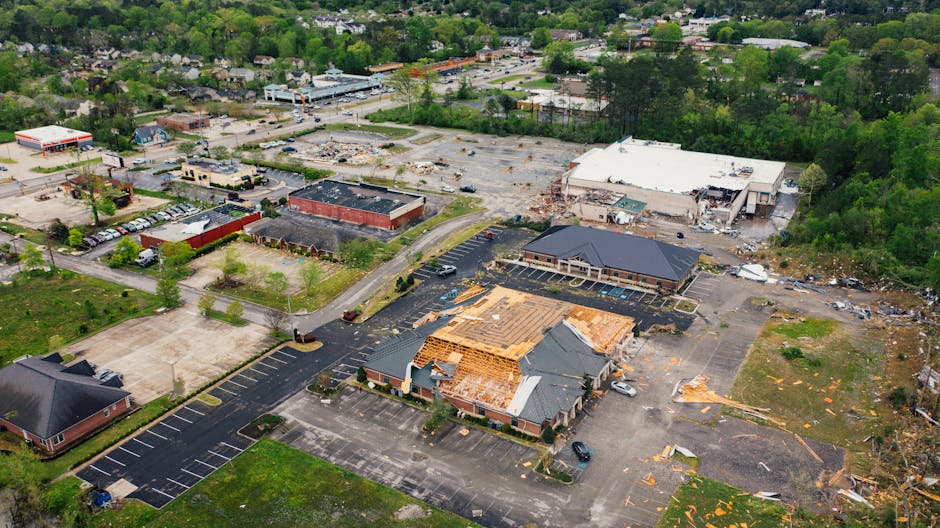
Core Protections Inside a Standard Commercial Property Insurance Policy
When you invest in commercial property insurance, you’re protecting the backbone of your business operations. Standard policies typically safeguard four essential areas of your business property.
Your building coverage protects the physical structure you own, including the main building itself, any attached structures or additions, permanently installed fixtures, outdoor signs attached to the building, and machinery that’s considered part of the building structure.
The business personal property portion covers the items that make your business run day-to-day. This includes your furniture and fixtures, inventory and supplies, machinery and equipment, computers and electronics, and even leased property you’re responsible for maintaining.
Many business owners don’t realize their policy also includes property of others protection. This covers items belonging to someone else that are temporarily in your care, like customer property being serviced, leased equipment, or items on consignment.
After a disaster, cleanup costs can be substantial. That’s why debris removal coverage is so valuable—it handles the cost of removing damaged property, disposing of debris, and general cleanup after a covered loss.
A Junction City client recently shared: “When that severe storm tore through our retail space, I was worried sick about the cleanup costs. I had no idea my policy included debris removal coverage—it saved us thousands in unexpected expenses we hadn’t budgeted for.”
Common Exclusions in Commercial Property Insurance
Even the most comprehensive commercial property insurance has limitations. Understanding these gaps helps you plan appropriate additional coverage where needed.
Standard policies typically exclude flood damage from external sources like rivers, heavy rain, or storm surge. Similarly, earthquake damage requires separate specialized coverage—something many Kansas business owners overlook.
Normal wear and tear isn’t covered by your policy, as insurance is designed for sudden, unexpected losses. Employee theft requires separate crime insurance, while cyber incidents like data breaches need specialized cyber liability coverage.
Other common exclusions include government action (seizure or destruction of property by government entities), war and nuclear hazards, and any intentional damage caused deliberately by the insured.
We’ve found many of our Kansas clients are surprised to learn that floods are excluded from standard policies. This is particularly important in areas prone to flash flooding—a real concern in many parts of our service area.
Popular Endorsements That Expand Your Safety Net
At Copeland Insurance Agency, we often recommend valuable endorsements to improve your protection. Think of these as customization options that fill potential coverage gaps in your standard policy.
Business income insurance has saved countless businesses after disasters by covering lost income and ongoing expenses when a covered event forces temporary closure. Without this coverage, even a brief shutdown can threaten your financial stability.
For businesses that rely heavily on equipment, equipment breakdown protection is invaluable, covering mechanical or electrical failures that standard policies exclude. Similarly, inland marine coverage extends protection to property in transit or at off-site locations—essential for businesses with mobile operations.
Cyber liability coverage has become increasingly important, protecting against costs associated with data breaches and cyber attacks. Utility services coverage safeguards against losses from interruption of water, power, or communication services—often overlooked until it’s too late.
When rebuilding after a loss, you may face increased costs to meet current building codes. Ordinance or law coverage addresses these expenses that standard policies typically don’t cover.
A restaurant client in Salina finded the value of endorsements when their walk-in freezer failed overnight. Their equipment breakdown endorsement not only covered the repairs but also the substantial inventory loss—a claim that would have otherwise come straight from their bottom line.
Climate risks continue to grow, with the National Centers for Environmental Information reporting 28 billion-dollar weather and climate disasters in 2023 alone, totaling approximately $95 billion in damage. This troubling trend makes comprehensive commercial property insurance more crucial than ever, especially in areas prone to severe weather. For more information, check out this Scientific research on climate risk.
If you’re concerned about natural disasters affecting your business, you might want to explore our More info about Natural Disaster Insurance page for additional protection options.
Valuation, Cost Factors & Budget Tips
When it comes to commercial property insurance, understanding how your property will be valued after a loss can make all the difference in your financial recovery. This critical decision affects both what you’ll pay now and what you’ll receive when you need it most.

Replacement Cost vs. Actual Cash Value in Commercial Property Insurance
Think of property valuation like this: if your 5-year-old computer gets damaged in a fire, would you want insurance to pay for a brand new equivalent or just what the old one was worth? That’s the fundamental difference between these valuation methods:
| Valuation Method | Definition | Premium Impact | Claim Example |
|---|---|---|---|
| Replacement Cost (RC) | Pays to repair or replace property with new items of like kind and quality, without deduction for depreciation | Higher premiums | $20,000 for new equivalent equipment |
| Actual Cash Value (ACV) | Pays replacement cost minus depreciation based on age and condition | Lower premiums | $12,000 after 40% depreciation deduction |
| Functional Replacement Cost | Pays to replace with less costly but functionally equivalent property | Moderate premiums | $15,000 for modern equivalent with same function |
I remember a client in Overland who learned this distinction the hard way. When a severe storm damaged their decade-old HVAC system, their replacement cost coverage meant they received enough for a brand-new system. Had they chosen ACV to save on premiums, they would have faced paying about 40% of the replacement out of pocket due to depreciation—a tough pill to swallow during an already stressful time.
What Determines Your Premium?
The cost of your commercial property insurance isn’t pulled from thin air. Several key factors influence what you’ll pay:
Your location plays a huge role—businesses in tornado alley or high-crime areas typically pay more than those in less risky locations. We’ve seen this with clients across Kansas, where two nearly identical businesses might pay significantly different rates based solely on their zip code.
Your building’s construction type matters too. Those concrete walls aren’t just sturdy—they’re saving you money! Fire-resistant materials like concrete and steel result in lower premiums than wood-frame structures that pose greater fire risks.
What happens inside your building (your occupancy or business type) affects your rates as well. A restaurant with multiple heat sources naturally presents higher fire risks than a quiet accounting office.
Your protection class—determined by your proximity to fire hydrants and stations, plus the quality of local fire departments—can significantly impact rates. Many rural Kansas businesses face higher premiums simply because emergency response might take longer to reach them.
Other factors include your building’s age and condition, your desired coverage limits and deductibles, your previous claims history, and whether you’ve installed protective devices like sprinkler systems and security alarms.
For more insights on what drives insurance costs, check out our guide to Understanding Your Small Business Liability Insurance Cost.
Smart Ways to Save Without Sacrificing Coverage
At Copeland Insurance Agency, we believe you shouldn’t have to choose between quality protection and affordability. Here are our favorite strategies for keeping commercial property insurance premiums manageable:
Bundle your policies for substantial savings. Combining property coverage with liability in a Business Owner’s Policy (BOP) can knock 10-15% off your premium—that’s money that stays in your business.
Consider higher deductibles if you have the cash reserves to handle them. Moving from a $500 to $2,500 deductible often results in significant premium reductions.
Pay annually rather than monthly. Many insurers offer discounts of 5-10% for paying your full premium upfront.
Invest in safety measures that protect your property and lower your premiums simultaneously. Modern sprinkler systems, security cameras, updated electrical systems, and storm shutters don’t just reduce your risk—they often pay for themselves over time through premium savings.
Review and update regularly as your business evolves. Too many businesses waste money insuring equipment they no longer own or underinsure new acquisitions.
Maintain good credit, as many insurers consider credit scores when determining commercial rates. A strong business credit profile can lead to better insurance rates.
One of our Wamego clients combined several of these strategies—bundling policies, installing a monitored security system, and updating their electrical wiring—and slashed their premium by over 20% while maintaining robust coverage. That’s smart business protection that respects your bottom line.
Buying Smart, Filing Claims & Ongoing Risk Management
Making informed decisions about commercial property insurance involves understanding the different policy types, knowing how to steer the claims process, and implementing risk management strategies to prevent losses.
Policy Types That Include Commercial Property Insurance
Commercial property insurance can be purchased in several ways, each with distinct advantages:
- Business Owner’s Policy (BOP): Bundles property and liability coverage at a discounted rate
- Best for: Small to medium-sized businesses with standard risks
- Advantage: Cost savings and simplified management
-
Limitation: May not provide enough coverage for larger businesses
-
Commercial Package Policy (CPP): Combines multiple coverages custom to your specific needs
- Best for: Medium to large businesses with more complex risks
- Advantage: Greater customization and higher limits available
-
Limitation: Typically more expensive than a BOP
-
Standalone Commercial Property Policy: Focuses exclusively on property protection
- Best for: Businesses with unique property risks or that already have liability coverage
- Advantage: Highly customizable for specific property needs
-
Limitation: Misses potential bundling discounts
-
Inland Marine Floaters: Specialized coverage for property that moves or is transported
- Best for: Contractors, photographers, or businesses with mobile equipment
- Advantage: Protects property regardless of location
- Limitation: Doesn’t cover fixed property at your business location
At Copeland Insurance Agency, we help clients in Riley, Salina, and across Kansas determine which policy structure best fits their needs and budget. Learn more about our Commercial Property Insurance offerings.
How to File a Commercial Property Insurance Claim
When disaster strikes, knowing how to file a claim efficiently can speed your recovery. Follow these steps:
- Notify Your Insurer Immediately: Contact your insurance company as soon as possible after the loss
- Secure the Property: Take reasonable steps to prevent further damage
- Document Everything:
- Take photos and videos of all damage before cleanup
- Create detailed inventory lists of damaged items
-
Save receipts for emergency repairs and temporary relocation
-
Meet with the Claims Adjuster: Be present during their inspection to point out all damage
- Obtain Repair Estimates: Get multiple quotes from reputable contractors
- Keep Communication Records: Document all conversations with your insurer
- Review Settlement Offers Carefully: Ensure they cover all damages before accepting
A restaurant client in Topeka experienced a kitchen fire that caused extensive damage. By following these steps—especially thorough documentation—they received a fair settlement that covered not only the physical damage but also the income lost during repairs.
Industry data shows that businesses that document losses thoroughly and file claims promptly receive settlements an average of 30% faster than those who don’t.
Proactive Risk Management Keeps Premiums Low
The best claim is the one you never have to file. Implementing these risk management strategies can prevent losses and help control commercial property insurance costs:

- Conduct Regular Maintenance:
- Inspect roofs and repair leaks promptly
- Maintain HVAC, electrical, and plumbing systems
- Clean gutters and ensure proper drainage
-
Test smoke detectors and fire extinguishers regularly
-
Develop Safety Protocols:
- Train employees on fire safety and emergency procedures
- Implement proper storage practices for flammable materials
-
Establish closing procedures that include security checks
-
Create a Disaster Response Plan:
- Document steps to take before, during, and after disasters
- Assign specific responsibilities to team members
- Practice emergency drills regularly
-
Back up business data offsite or in the cloud
-
Update Property Valuations Annually:
- Review building and contents values
- Account for new equipment or inventory
- Consider construction cost increases
A manufacturing client in Junction City implemented these strategies and avoided what could have been a major electrical fire when their regular maintenance check identified an overheating panel. The repair cost was minimal compared to what a fire would have cost in damages and business interruption.
Conclusion
Commercial property insurance forms the foundation of a comprehensive business protection plan. From safeguarding your building and equipment to ensuring business continuity after a loss, this coverage is essential for businesses of all sizes.
At Copeland Insurance Agency, we understand that every business in Kansas has unique property insurance needs. Whether you’re a retailer in Manhattan, a contractor in Topeka, or a restaurant owner in Salina, we help you steer the complexities of commercial property insurance to find the right coverage at the right price.
Remember these key takeaways:
- Understand Your Coverage: Know what’s covered, what’s excluded, and where you might need additional endorsements
- Choose the Right Valuation Method: Replacement cost provides the most complete protection but at a higher premium
- Implement Risk Management: Proactive measures prevent losses and can lower your premiums
- Review Regularly: As your business grows and changes, your insurance needs will too
Don’t wait for a disaster to find gaps in your coverage. Contact Copeland Insurance Agency today to review your commercial property insurance needs and ensure your business assets are fully protected.
We help protect your bricks, clicks, and inventory with custom coverage and standout service—start safeguarding your business today with a quick quote: Commercial Property Insurance